
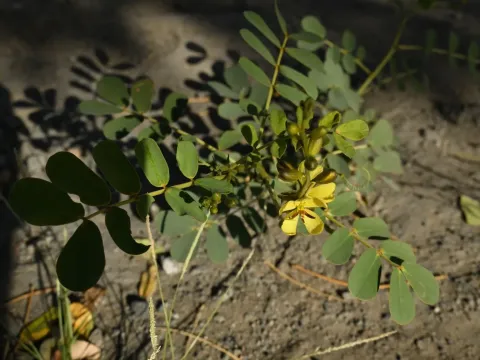
Cassia holosericea
Cassia holosericea
Cassia holosericea is a herbaceous perennial plant belonging to the Fabaceae family. It is native to arid regions where it has evolved to thrive under harsh environmental conditions. The plant is botanically distinguished by its dense, velvety pubescence covering the foliage, which serves as a physiological mechanism to minimize evapotranspiration in hot climates.
What the section contains
Cassia holosericea
The agronomic success of this crop depends heavily on soil selection. It requires well-drained, sandy, or light loam soils with a neutral pH level. Proper aeration of the soil is critical because the root system is highly sensitive to hypoxia caused by waterlogging, which often leads to rapid decay and plant death.
Regarding climatic requirements, Cassia holosericea is a thermophilic species. It demands high levels of solar radiation and constant warmth throughout the growing season. It is completely intolerant of frost, meaning that in temperate zones, it must be grown as a seasonal crop under glass or in specialized greenhouses to ensure survival.
Agricultural management for this species is relatively straightforward due to its drought tolerance. Primary practices include row spacing maintenance to prevent overcrowding and ensure adequate airflow. As a legume, it contributes to soil health through symbiotic nitrogen fixation, provided that the necessary soil microflora are present.
The primary economic use of Cassia holosericea is centered on the pharmaceutical industry. Its biomass contains specific bioactive compounds, particularly anthraquinones, which are utilized in the manufacturing of herbal medicines. Its use as forage remains secondary and requires careful processing to neutralize potential antinutritional components.
The main phytosanitary threats to Cassia holosericea include fungal infections such as root rot and powdery mildew. These are predominantly triggered by high ambient humidity and poor ventilation. Preventive measures include strictly controlled irrigation and the maintenance of optimal spacing between individual plants.
Pest management is focused on controlling infestations of spider mites and various lepidopteran larvae. Due to the potential use of the plant for medicinal purposes, chemical interventions are strictly limited. Integrated pest management, focusing on biological controls and physical barriers, is the preferred strategy for maintaining high-quality yields.