
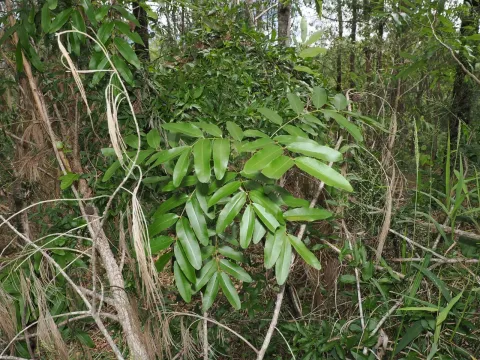
Cassia brewsteri
Cassia brewsteri
Cassia brewsteri, commonly known as the Leichhardt bean, is a significant member of the Fabaceae family. It is native to the northern regions of Australia, where it thrives in varied tropical habitats.
What the section contains
Cassia brewsteri
As a light-demanding species, this tree requires full sun exposure to reach its maximum aesthetic and physiological potential. Providing ample space for canopy development is essential for its natural architectural growth.
Soil requirements focus on high drainage capacity, as the species is intolerant to waterlogged conditions. It performs best in well-drained loamy soils enriched with organic matter, although it is adaptable to poor soils if drainage is sufficient.
Climate adaptability is limited to tropical and frost-free subtropical environments. It lacks cold hardiness, making it unsuitable for regions where temperatures drop near or below freezing point.
Agricultural management should prioritize minimal interference with the root system and careful mulching to maintain soil moisture consistency without causing root rot.
Pests such as aphids and whiteflies frequently colonize the tender foliage of Cassia brewsteri. Integrated pest management using horticultural oils is often the preferred method of control.
Fungal leaf spot diseases may occur, especially in stagnant air conditions or regions with high humidity. Proper spacing between trees is recommended to facilitate airflow and minimize infection risk.
Root rot caused by Phytophthora species is a major threat if soil drainage is compromised. Once established, this pathogen is difficult to manage, making prevention through drainage control the primary defense.
Sooty mold can develop on leaves following infestations of honeydew-producing insects. Managing the underlying pest population usually resolves the mold issue effectively.
Mechanical injuries to the bark or branches can serve as entry points for wood-rotting fungi. Pruning wounds should be minimized and kept clean to ensure rapid compartmentalization by the plant.