
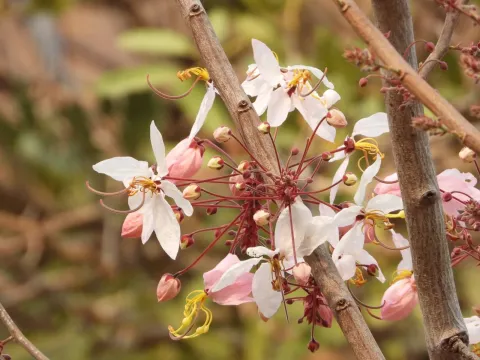
Cassia bakerana
Cassia bakerana
Cassia bakerana, a distinguished member of the Fabaceae family, is a deciduous tree known for its spectacular display of pink to pale-pink flowers. It is widely admired for its canopy structure and decorative value in tropical landscapes across Southeast Asia.
What the section contains
Cassia bakerana
Originating from the tropical regions of Thailand and Myanmar, the tree thrives in hot and humid climates. It is highly sensitive to cold and requires a frost-free environment to maintain its health, making it unsuitable for temperate regions without controlled greenhouse conditions.
Environmental requirements for Cassia bakerana center on full sun exposure. The tree demands significant solar energy to sustain its heavy flowering cycle. Planting it in a location that receives at least six to eight hours of direct sunlight is essential for optimal performance.
Regarding soil conditions, the plant prefers well-draining, fertile soils that are slightly acidic to neutral. Because of its sensitivity to root suffocation, avoiding heavy clays that retain excessive moisture is vital. Adding organic matter helps in improving soil structure and aeration.
Cultural practices include regular irrigation during the initial establishment phase. Once the tree is mature, it exhibits moderate drought tolerance, although supplementary watering during peak dry seasons enhances vegetative health and ensures a more prolific floral display in the following cycle.
Root rot is the most significant threat to Cassia bakerana, typically caused by poor drainage or overwatering. This condition leads to wilting and branch dieback, often resulting in total tree failure if not addressed through immediate drainage improvement and fungicide application.
Aphids and spider mites are common pests that colonize tender new foliage, especially during periods of extreme heat and humidity. These insects can reduce the tree's vigor and cause aesthetic damage to the leaves, necessitating targeted insecticide applications.
Fungal leaf spot diseases may appear during the monsoon season when humidity levels remain high for extended periods. Pruning the inner branches to improve airflow within the canopy is a recommended practice to reduce the incidence of such diseases.
Scale insects can infest the bark and stems, potentially causing sap loss and general weakness. Manual removal or the use of horticultural oils can be effective methods for managing infestations without the need for harsh chemical interventions that might harm pollinators.
To minimize these threats, a proactive approach to tree health is necessary. This includes regular site monitoring, keeping the base of the tree clear of debris, and ensuring that water does not pool around the root zone, as preventative care is the best strategy.