
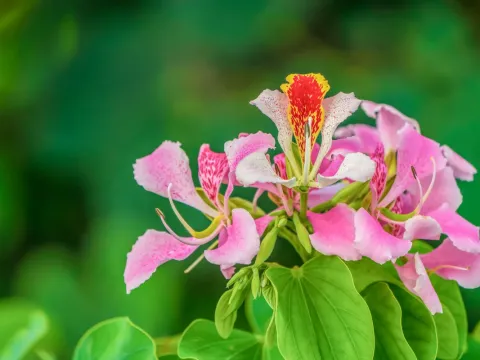
Bauhinia monandra
Bauhinia monandra
Bauhinia monandra is primarily propagated through seeds. To ensure successful germination, seeds should be scarified by nicking the hard seed coat to allow moisture absorption before planting.
What the section contains
Bauhinia monandra
Soaking the seeds in warm water for 24 hours prior to sowing further improves the success rate. The seeds should be planted in a well-draining, sterile potting mix at a depth of about 1 to 2 centimeters.
Consistent temperatures ranging between 22 and 26 degrees Celsius are crucial during the germination phase. The soil should be kept moist but never waterlogged to avoid seed decay before emergence.
Seedlings typically emerge within a few weeks. Once they develop their first set of true leaves, they can be transplanted into individual pots with high-quality, nutrient-rich soil to support rapid early growth.
Ensuring adequate light levels from the seedling stage prevents etiolation and promotes the development of strong, thick stems, which are essential for the future structural integrity of the tree.
As a member of the Fabaceae family, this species thrives in tropical climates. It requires full sun exposure to reach its maximum aesthetic potential and to produce its characteristic orchid-like flowers.
The ideal soil for this cultivar is a deep, fertile, and well-draining loam. While it is adaptable to various soil types, maintaining a slightly acidic to neutral pH is beneficial for optimal nutrient uptake.
This plant is not frost-tolerant and requires protection from temperatures below 10 degrees Celsius. In non-tropical regions, it is best grown in large containers that can be moved indoors during colder seasons.
Watering should be deep and regular during the active growing season, allowing the top layer of soil to dry out slightly between irrigation events to prevent root stress and fungal issues.
Pruning is essential to maintain a desirable shape and to encourage denser foliage. It should be performed after the flowering period to remove dead wood and direct energy into new growth cycles.
Spider mites are a common pest in indoor environments where humidity is low. Regular inspection of the undersides of leaves and increasing ambient moisture can help control these infestations.
Scale insects can attach to the stems and branches of the tree, extracting nutrients. Manual removal combined with horticultural oil applications is generally the most effective way to manage these pests.
Fungal leaf spot diseases may appear if there is poor air circulation and high humidity around the foliage. Proper spacing and ventilation are key preventative measures against such outbreaks.
Root rot is the most dangerous condition for this species, usually caused by overwatering or poor drainage. Using high-quality porous pots and proper substrates is vital for root health.
Aphids can target the tender new growth and developing flower buds, causing stunted development. If an infestation occurs, insecticidal soaps or neem oil are effective treatments to protect the plant.