
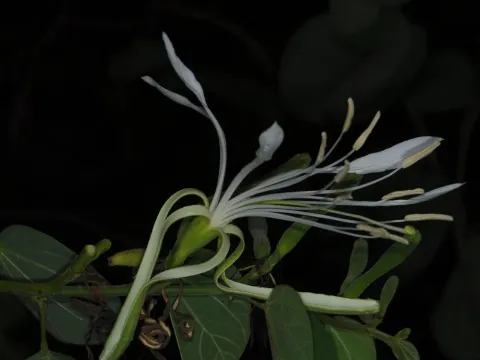
Bauhinia mollis
Bauhinia mollis
Propagation of Bauhinia mollis is primarily carried out via seeds in protected nursery environments. Seeds require scarification to break dormancy and ensure uniform germination across the crop.
What the section contains
Bauhinia mollis
Sowing should take place in spring when temperatures are consistently above 22 degrees Celsius. Maintaining a stable warm environment is crucial for achieving high germination rates.
The growing medium must be porous and nutrient-rich, typically a mix of loam, sand, and organic matter to prevent waterlogging. Good drainage is non-negotiable for successful propagation.
Seeds should be planted at a shallow depth of approximately 1.5 centimeters. Covering the seedling trays with clear plastic helps retain essential moisture during the critical early germination phase.
Once seedlings have established several true leaves, they should be gradually acclimated to lower humidity levels and higher light intensity to prepare them for transplanting.
As a member of the Fabaceae family, Bauhinia mollis thrives in sunny, well-ventilated locations. It is best suited for tropical and subtropical climates where frost is non-existent.
The plant prefers fertile, well-drained soil with a neutral to slightly acidic pH. Avoiding compacted soil is essential to ensure proper root respiration and long-term health.
Watering regimes should be balanced; while the plant is drought-tolerant once established, consistent moisture during the growing season significantly improves overall vigor and growth rates.
Bauhinia mollis exhibits unique biological traits, such as bifoliate leaves that can fold during the night or periods of moisture stress to reduce water loss via transpiration.
The tree responds well to balanced NPK fertilization during its primary growth period, which encourages robust canopy development and prepares the plant for the dormant winter phase.
Root rot is the most common pathology, usually caused by overwatering or soil conditions that lack proper drainage. This is often fatal if not diagnosed and corrected in the early stages.
Scale insects represent a major pest threat, as they attach to stems and leaves, extracting sap and weakening the plant. Monitoring and early treatment are essential for management.
Spider mites are prevalent in environments with low air humidity, frequently attacking the undersides of leaves. Regular misting can serve as a simple yet effective deterrent.
Aphids can cause damage to tender new shoots, leading to stunted growth or leaf curling. If outbreaks occur, they should be managed with appropriate horticultural oil or insecticidal soap.
Overall plant health is best maintained through consistent monitoring, ensuring proper airflow around the canopy, and avoiding conditions that favor fungal development in the soil.