
Bauhinia purpurea
Bauhinia purpurea
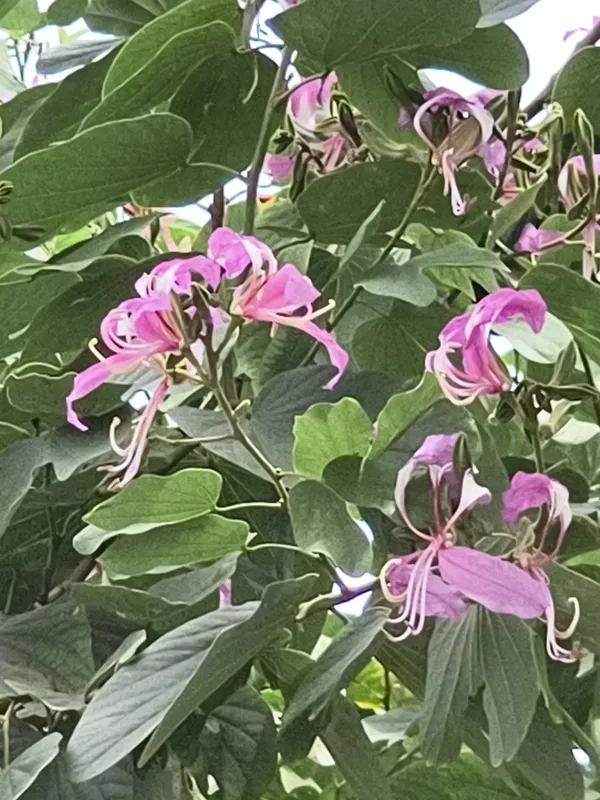
Description
Sowing dates
Bauhinia purpurea is a flowering tree belonging to the Fabaceae family. Propagation is typically achieved through seeds, which should be sown in a well-draining soil mix.
Seed scarification is recommended to break dormancy and ensure high germination rates. Soaking seeds for 24 hours prior to planting is a standard practice for commercial nurseries.
The optimal sowing time is spring, when soil temperatures are consistently above 20°C. Maintaining a stable environment is crucial for seedling development during the early stages.
Seedlings are transplanted into individual containers once they develop several true leaves. This ensures that the root system is well-established before final planting.
Young trees should be protected from extreme weather conditions for the first year. Proper spacing is necessary to allow for future crown development as the tree matures.
Growing requirements
This species thrives in full sun, requiring at least six hours of direct sunlight per day to promote heavy flowering and overall plant health.
The soil should be fertile and exhibit excellent drainage properties. While it adapts to various soil types, loamy soils rich in organic matter provide the best growth results.
Watering requirements are moderate; the plant prefers consistent moisture during the active growth season but should be allowed to dry out slightly between waterings.
Climatically, it prefers tropical and subtropical environments. It is sensitive to frost, and prolonged cold temperatures will damage the canopy and the structural integrity of the wood.
Regular maintenance includes pruning to shape the tree and remove dead branches. This practice encourages denser branching and improves the overall aesthetic of the plant.
Yield
The economic value of Bauhinia purpurea is primarily ornamental rather than agricultural. It is widely used in landscape architecture for its showy orchid-like flowers.
The duration of the flowering period is the main measure of a specimen's success. Under ideal conditions, a tree can provide a vibrant display of color for several months.
In traditional practices, some parts of the plant are harvested for medicinal purposes, although this is secondary to its primary use as a decorative shade tree.
Timber from the tree is occasionally used for small-scale woodcraft, although it is not considered a primary commercial timber species in forestry.
The seeds are sometimes gathered and sold for propagation purposes in gardening markets, creating a secondary source of value for mature specimens.
Main diseases and pests
Root rot caused by overwatering and fungal infections is the most common threat to the tree's health in improperly drained soils.
Leaf-feeding insects and spider mites can cause significant damage to the foliage, necessitating integrated pest management programs to keep populations low.
Fungal diseases like powdery mildew may appear during humid seasons, especially if the tree is located in a spot with poor air circulation.
Nutrient deficiencies often manifest as chlorosis; this is usually addressed by soil amendments rather than chemical treatments to maintain long-term soil health.
Mechanical damage from strong winds can split branches. Providing support for young trees is a vital measure to prevent structural failures.