
Bauhinia racemosa
Bauhinia racemosa
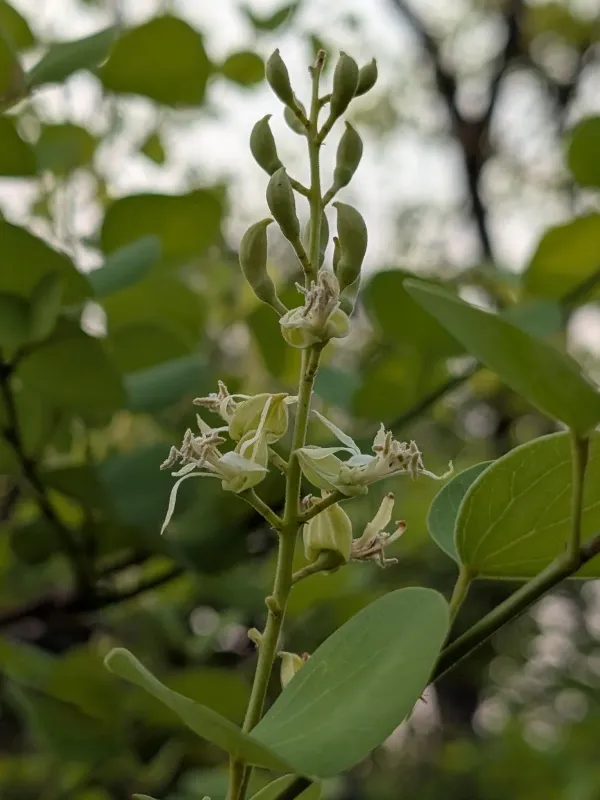
Description
Sowing dates
Propagation of Bauhinia racemosa is primarily carried out through seeds. Due to the hard seed coat, scarification or soaking in warm water for at least 12 to 24 hours is highly recommended to significantly improve germination rates.
In tropical environments, sowing should coincide with the beginning of the rainy season. This timing ensures sufficient soil moisture, which is critical for the early growth stages of the seedlings in nursery beds or individual containers.
The optimal temperature for seed germination ranges from 25 to 30 degrees Celsius. Growers must ensure the use of well-draining substrates, as excessive water retention can lead to seed rotting and fungal infections during the initial phase.
Seedlings require partial shade during the first few months of development to prevent heat stress and sunscald. A gradual acclimatization process to full sunlight should be initiated once the plants have established a sturdy stem.
For large-scale planting, a spacing of approximately 3 to 4 meters between trees is ideal. This density allows for proper crown development and ensures sufficient air circulation, which helps in preventing canopy diseases.
Growing requirements
Bauhinia racemosa is a member of the Fabaceae (legume) family and is native to tropical and subtropical regions of Asia. The species is highly adaptable, exhibiting robust growth even in nutrient-poor and rocky soil conditions.
The plant thrives in locations with ample sunlight and prefers well-drained loamy or sandy soils. It is well-suited for regions with distinct dry seasons, as it demonstrates a high tolerance for periodic drought once established.
The species is strictly tropical and cannot tolerate frost. Its growth is significantly hampered in waterlogged or swampy conditions, where its root system is prone to decay. Soil pH should ideally be neutral or slightly acidic.
Cultural practices include regular pruning to maintain a desirable shape and promote lateral branching. This practice is essential for producing uniform yields of leaves and bark, which are frequently harvested for medicinal use.
As a nitrogen-fixing legume, Bauhinia racemosa enhances soil fertility. It typically does not require heavy chemical fertilization, as it forms symbiotic relationships with root-nodulating bacteria that provide necessary nitrogen compounds.
Yield
The economic utility of Bauhinia racemosa is multifaceted. It is widely recognized in traditional medicine, particularly Ayurveda, for its anti-inflammatory and antiseptic properties found in the bark and leaves.
The fibers derived from the bark are historically significant for making traditional ropes, coarse textiles, and cordage. This makes the plant a valuable resource for local artisanal industries and small-scale rural enterprises.
The tree serves as a vital honey source, as its flowers attract a wide range of pollinators. Integrating this species into agroforestry systems helps support local apiaries and promotes healthy biodiversity within agricultural landscapes.
In arid climates, the leaf biomass can be utilized as supplemental fodder for livestock. The tree produces a substantial amount of foliage that regenerates quickly after harvesting, ensuring a sustainable supply.
The overall yield depends on environmental conditions and management practices. A mature tree can provide a consistent annual harvest of medicinal raw material and fiber without compromising its structural integrity.
Main diseases and pests
Bauhinia racemosa is generally resistant to many pests, but it can be susceptible to specific tropical lepidopteran larvae. These caterpillars can cause significant leaf damage if left unmanaged during the peak growing season.
Fungal issues, such as powdery mildew and anthracnose, are common in humid environments with poor canopy ventilation. Regular thinning and strategic pruning are the best preventative measures against these pathogens.
Root rot is a critical threat often caused by poor drainage or overwatering. Maintaining a well-aerated soil environment is essential to protect the root system from decay-inducing fungi throughout the tree's lifespan.
Young plants are frequently targeted by rodents that gnaw on the bark, potentially killing the saplings. Protective tree guards or wire mesh around the base of the trunk during the first few years are highly effective deterrents.
Overall, this species possesses a strong natural defense mechanism. When grown under appropriate climatic and soil conditions, it requires minimal chemical intervention, making it an excellent candidate for sustainable and organic cultivation models.