
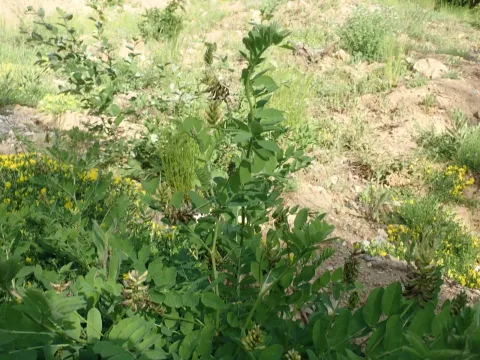
False licorice milkvetch
Astragalus glycyphylloides
False licorice milkvetch (Astragalus glycyphylloides) is a perennial legume species valued for its role in sustainable forage production and soil improvement.
What the section contains
False licorice milkvetch
The sowing process is best executed in early spring, once the soil has warmed up, ensuring optimal conditions for seed germination and seedling establishment.
Seeds should be planted at a shallow depth of 1.5 to 3 cm, ensuring consistent soil moisture contact which is vital for the survival of the young sprouts.
Row cropping is the preferred method for establishing a lasting stand, as it reduces competition for water and nutrients during the plant's early development stages.
Field preparation must focus on creating a fine, firm seedbed, which significantly improves the success rate of the stand establishment in variable soil conditions.
This species is well-adapted to a variety of climates, exhibiting excellent winter hardiness and the ability to thrive in regions with cold winters and varied rainfall.
It prefers well-drained, fertile soils but displays significant tolerance to neutral or slightly alkaline soil conditions, making it adaptable to many landscapes.
While the plant is somewhat drought-tolerant once established, maximizing biomass yield requires consistent moisture during the most active phase of vegetative growth.
Astragalus glycyphylloides is adaptable to different light conditions, allowing it to perform well even in mixed-species pastures or in partially shaded areas.
Its ability to form symbiotic relationships with nitrogen-fixing bacteria makes it an essential asset for improving soil fertility and reducing synthetic nitrogen reliance.
The crop is recognized for its high nutritional value, providing a rich source of proteins and amino acids that are beneficial for livestock nutrition.
Biomass production is highly dependent on environmental factors, particularly water availability and the timely implementation of harvesting and management practices.
In optimal conditions, the species is capable of producing multiple harvests per year while maintaining a high leaf-to-stem ratio, which is critical for feed quality.
Its perennial nature allows for a productive lifespan of up to several years, which offers an economic advantage in terms of reduced labor and seed costs.
The plant shows excellent regrowth capacity after mowing or grazing, which contributes to its long-term yield stability in intensive agricultural systems.
While generally hardy, the crop can be susceptible to fungal pathogens such as leaf spot or powdery mildew under conditions of high humidity and poor air circulation.
Proper field management, including the prevention of dense, unharvested stands, is the best strategy for mitigating the risk of widespread fungal infections.
Insect pests such as weevils or aphids can cause damage to foliage and reproductive parts, which can negatively impact both biomass and seed production yields.
Crop rotation and weed management in the first year of growth are essential to ensure the young milkvetch plants are not suppressed by aggressive weed species.
Implementing a regular harvesting schedule is also a form of preventative management, as it helps break the life cycle of many common pests and foliage pathogens.
Harvesting for high-quality fodder should ideally occur at the budding stage or early flowering, as this timing captures the highest protein concentration in the plant.
Mowers should be set to a height of 7-10 cm to avoid damaging the crown of the plant, which is crucial for quick and successful regrowth after the harvest.
The drying process for hay needs to be efficient to preserve the leaves, where the vast majority of the plant's protein and vitamins are typically stored.
If producing seed, harvest timing is critical; crops should be collected when the pods change color to prevent pre-harvest loss caused by natural seed shattering.
Cleaned seeds should be stored in a cool, dry environment to maintain germination vitality for the next planting season, ensuring long-term field success.