
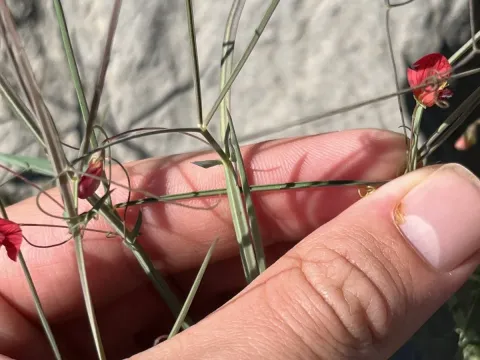
Famine weed
Lathyrus setifolius
Famine weed (Lathyrus setifolius) is an annual herbaceous plant belonging to the Fabaceae family. This species is native to the Mediterranean region and is well-adapted to areas with mild climatic conditions.
What the section contains
Famine weed
The seeds of this legume require sufficient soil warmth to germinate effectively. The optimal sowing time is during early spring, once the soil has drained excess winter moisture but still retains enough water to support uniform emergence.
Seeding rates are determined by the intended end-use of the crop, whether for seed production or green forage. A row-seeding method with intervals of 15-20 cm is recommended to ensure each plant receives sufficient resources.
The depth of sowing should range from 3 to 5 centimeters, adjusted based on soil texture and moisture levels. Planting too deep can delay germination and reduce the overall vigor of the crop seedlings.
Initial growth of Famine weed is moderate. Once the first true leaves appear, root system development accelerates, allowing the plant to establish itself firmly and adapt to local environmental stressors.
Famine weed is not highly demanding regarding soil fertility, but it thrives best in light, sandy, or loamy soils with adequate aeration. The most critical requirement is a well-drained site to prevent waterlogging.
This crop exhibits significant drought tolerance, making it a viable option for regions where water resources are limited. However, supplementary irrigation during the peak flowering stage can substantially increase biomass yield.
Famine weed prefers open, sunny locations. Excessive shading causes the stems to etiolate and reduces overall biomass, which negatively impacts the nutritional value and productivity of the forage.
The soil pH should ideally be close to neutral. In highly acidic soils, liming is recommended to promote the activity of nitrogen-fixing bacteria, which are essential for the legume's healthy development.
Moderate temperatures are ideal for growth. Although the plant is relatively hardy, sudden late spring frosts following the start of vegetation can damage tender young shoots and reduce yield potential.
The primary agricultural use of Famine weed is as a high-protein forage crop for livestock. The green biomass is highly palatable and provides excellent nutritional content for various ruminants.
The seeds of this crop are rich in protein, making them a valuable component for concentrated feed mixes. Yields of seed depend largely on adherence to optimal agronomic practices and favorable weather conditions during the growing season.
Beyond its feed value, Lathyrus setifolius can be utilized as a green manure crop. Its extensive root system improves soil structure, while the symbiotic relationship with nitrogen-fixing bacteria naturally enriches the soil nitrogen profile.
Average biomass yields vary depending on the growing region and the level of management. Under favorable conditions, this crop is capable of forming dense, productive stands.
To maximize yields, it is crucial to manage weed competition during the early stages of vegetation, as Famine weed may be outcompeted by more aggressive invasive weeds before it fully establishes.
The most significant pests affecting this crop are pea and bean weevils, which can damage root systems and cotyledonous leaves during the emergence phase. Vigilance and monitoring are required during the spring months.
Seed beetles pose a threat to seed production by infesting the grain during the maturation process. This reduces not only the viability of the seeds for planting but also their suitability for long-term storage.
Powdery mildew is the most common fungal disease, typically occurring in conditions of high humidity or overly dense stands. Preventive measures include maintaining proper planting density and following standard crop rotation practices.
Root rot can affect plants in areas with poor drainage. Minimizing soil moisture stagnation is a key management strategy to reduce the risk of pathogen outbreaks throughout the entire growth cycle.
Aphids can also cause considerable damage by sucking sap from young shoots and inflorescences. Management involves both cultural practices and the judicious use of authorized insecticides when pest thresholds are exceeded.
Harvesting for green forage should be performed during the flowering stage when the concentration of nutrients in the plant is at its peak. Mown biomass dries relatively quickly, allowing for efficient hay preservation.
For seed production, harvesting commences once the pods on the lower and middle parts of the stem have reached maturity. It is critical to avoid delays, as the pods may shatter, leading to significant seed losses.
Standard grain combines are used for harvest, with the threshing mechanism adjusted specifically for this crop. Reducing drum speed is essential to prevent mechanical damage to the delicate seed coats.
After threshing, seeds require thorough cleaning and drying to reach safe storage moisture levels. Long-term storage should be conducted in dry, well-ventilated areas at a stable, cool temperature.
Post-harvest residues (straw) can be utilized in livestock farming as roughage or incorporated into the soil as organic matter, which enhances overall soil fertility for future cropping cycles.