
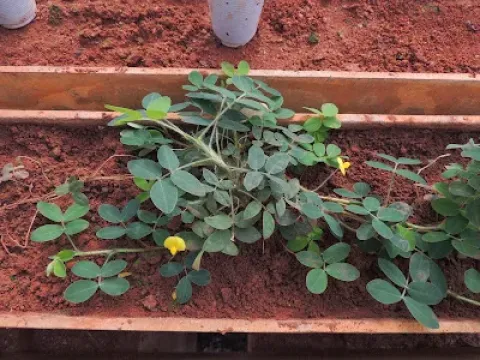
Arachis pusilla
Arachis pusilla
Arachis pusilla, commonly known as the hairy peanut, is a perennial herbaceous plant belonging to the legume family (Fabaceae). This species is a significant wild relative of the commercial peanut, serving as a vital subject for botanical research and evolutionary studies of the genus.
What the section contains
Arachis pusilla
The plant is native to South America, with its primary distribution found in the savanna regions of Brazil. It has evolved to thrive in environments characterized by distinct wet and dry seasons, demonstrating high resilience to harsh, naturally occurring climatic variations.
Climatic requirements for Arachis pusilla necessitate tropical heat and high luminosity. It is strictly sensitive to frost, which prevents it from being cultivated in temperate regions, and it requires consistent exposure to sunlight to maintain vigorous growth throughout the vegetative stage.
Soil requirements are centered on high porosity and excellent drainage. Given that the plant undergoes geocarpy, where the flowers must push their ovaries into the soil to develop seeds, loose and sandy substrates are essential to facilitate the growth of the subterranean pods.
Agricultural use of this species is largely limited to germplasm conservation and breeding programs. By studying Arachis pusilla, researchers aim to incorporate favorable traits, such as drought tolerance and pest resistance, into modern commercial peanut cultivars to improve yields.
The main pathological threats to this species involve fungal pathogens, particularly those responsible for leaf spot diseases, which proliferate rapidly when humidity levels remain elevated for extended periods during the growing season.
Insect pests such as subterranean beetles and nematodes pose a significant risk, as they directly damage the developing pods within the soil, leading to substantial crop losses and reduced viability of the seeds for future propagation.