
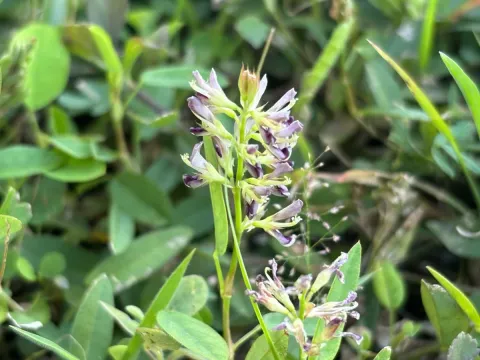
Alysicarpus
Alysicarpus
Alysicarpus seeds should be sown at the beginning of the rainy season when the soil has warmed up sufficiently to ensure rapid germination. The ideal soil temperature for seedling emergence is between 25 and 30 degrees Celsius.
What the section contains
 Alysicarpus bupleurifolius
Alysicarpus bupleurifolius
Alysicarpus bupleurifolius
 Alysicarpus glumaceus
Alysicarpus glumaceus
Alysicarpus glumaceus
 Alysicarpus hamosus
Alysicarpus heyneanus
Alysicarpus heyneanus
Alysicarpus hamosus
Alysicarpus hamosus
Alysicarpus heyneanus
Alysicarpus heyneanus
 Alysicarpus longifolius
Alysicarpus longifolius
Alysicarpus longifolius
 Alysicarpus monilifer
Alysicarpus monilifer
Alysicarpus monilifer
 Alysicarpus nummularifolius
Alysicarpus nummularifolius
Alysicarpus nummularifolius
 Alysicarpus ovalifolius
Alysicarpus ovalifolius
Alysicarpus ovalifolius
 Alysicarpus rugosus
Alysicarpus rugosus
Alysicarpus rugosus
 Alysicarpus scariosus
Alysicarpus scariosus
Alysicarpus scariosus
 Alysicarpus tetragonolobus
Alysicarpus tetragonolobus
Alysicarpus tetragonolobus
Alysicarpus
The sowing depth typically ranges from 1 to 2 centimeters, depending on the soil texture and moisture levels. In light, sandy soils, a slightly deeper placement is recommended to protect the seeds from desiccation.
Seeding rates vary based on the intended use, with higher densities required for hay production and moderate rates for pastures. A row spacing of 30-40 centimeters is usually optimal for promoting healthy plant development.
Seed scarification is often beneficial before planting to improve germination rates, as the seed coat can be quite hard. Applying phosphorus fertilizers at the time of sowing helps stimulate strong root development in the early stages.
The crop exhibits strong initial growth vigor, which allows it to canopy quickly and effectively suppress weeds. This competitive nature makes Alysicarpus a reliable choice for establishing productive forage stands.
Alysicarpus belongs to the Fabaceae family and is native to tropical and subtropical regions of Africa, Asia, and Australia. It is highly valued in agriculture for its versatility and adaptation to various environmental conditions.
While the plant thrives in well-drained soils, it exhibits a notable tolerance for waterlogged conditions, making it suitable for areas with heavy rainfall. It performs well in nutrient-poor soils by fixing atmospheric nitrogen.
Full solar exposure is necessary to maximize biomass production. Shading tends to reduce the overall yield and can negatively impact the nutritional quality of the forage harvested.
Its drought tolerance is supported by a robust taproot system, allowing the plant to reach deep soil moisture. This trait makes it a dependable source of feed even during dry spells within the growing season.
The crop tolerates a wide range of soil pH levels, from slightly acidic to neutral. Ensuring good soil aeration is crucial for the optimal activity of nitrogen-fixing bacteria within the root nodules.
The green biomass yield of Alysicarpus can range from 15 to 30 tons per hectare, depending on local conditions and management practices. Multiple cuts can be achieved throughout the growing season under optimal conditions.
The crude protein content in dry matter typically ranges from 14% to 18%, providing a high-quality forage source for ruminant livestock. Nutritional value is highest when the plant is harvested during the flowering stage.
Timely harvesting is essential to maintain the best balance between protein content and fiber levels. Harvesting too late often leads to stem lignification, which reduces digestibility for livestock.
Seed yields can reach up to 800 kilograms per hectare with proper management and harvesting technology. It is important to monitor pod maturity closely to prevent premature shattering and yield loss.
Alysicarpus integration into crop rotations contributes significantly to soil fertility. By enriching the soil with nitrogen, it acts as a beneficial precursor for subsequent cereal crops in the rotation cycle.
Alysicarpus is generally resistant to many common plant diseases, although excessive moisture may lead to fungal leaf spots. Early detection and proper field management can mitigate these risks effectively.
Leaf-eating caterpillars and certain insects are the primary pests that may impact biomass production. Integrated pest management strategies are recommended to keep damage levels within acceptable economic thresholds.
Root nematodes can cause issues, particularly in sandy soil types. Implementing diverse crop rotation schemes is the most effective preventative measure against these soil-borne threats.
Seed treatments with fungicides are advisable to protect young seedlings during the establishment phase. This ensures uniform stands and reduces the risk of early-stage seedling mortality.
Controlling plant density is key to maintaining proper airflow within the canopy. Good ventilation helps keep foliage dry, reducing the conditions favorable for fungal growth and pest outbreaks.
Harvesting for forage should occur before mass seed formation to ensure high protein levels. Using modern disc mowers facilitates clean cuts and encourages healthy regrowth for subsequent harvests.
When producing hay, rapid drying is critical to prevent leaf loss, as leaves contain the highest concentration of protein. Gentle handling of windrows during the drying process is necessary to preserve forage quality.
Seed harvesting should take place when the pods have turned brown and reached a moisture content of 12-14%. Modern harvesting equipment, when properly adjusted, minimizes seed damage and loss.
Post-harvest storage should be in cool, dry, and well-ventilated conditions to maintain long-term seed viability. Properly stored seeds will retain high germination energy for future seasons.
For grazing applications, rotational grazing systems are highly recommended to ensure the plant has enough time to recover. This practice prevents overgrazing and promotes the longevity of the pasture stand.