
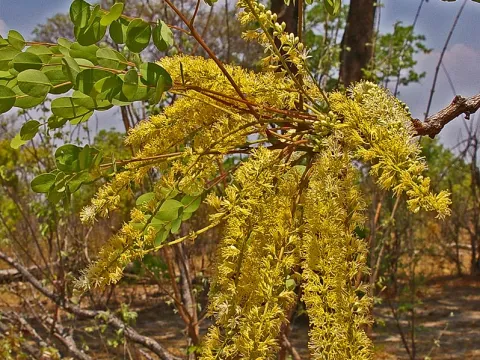
Amblygonocarpus
Amblygonocarpus
Amblygonocarpus is a genus of flowering plants belonging to the legume family, Fabaceae, specifically the Mimosoideae subfamily. The genus is represented most prominently by Amblygonocarpus andongensis, a medium to large-sized tree known for its resilient nature.
What the section contains

Amblygonocarpus
The native range of this plant encompasses various tropical regions across Africa, particularly within sub-Saharan countries like Angola, Zambia, and Tanzania. It thrives in open woodland habitats and wooded savannas, where it contributes to the structural complexity of the ecosystem.
Ecologically, the species is highly adapted to tropical climates characterized by distinct wet and dry seasons. It shows significant tolerance to drought, which is a critical trait for surviving in the competitive and water-stressed environments of the African interior.
Botanically, Amblygonocarpus features bipinnate leaves and distinct, indehiscent, or slowly dehiscent woody pods that are often curved. The tree produces small, numerous flowers during the onset of the rainy season, which are vital for local pollinator populations.
In terms of economic utility, the tree is primarily valued for its exceptionally hard and durable wood, often utilized in heavy construction and tool making. Furthermore, it plays a role in traditional ethnobotanical practices, serving various medicinal purposes within local indigenous cultures.