
Alysicarpus scariosus
Alysicarpus scariosus
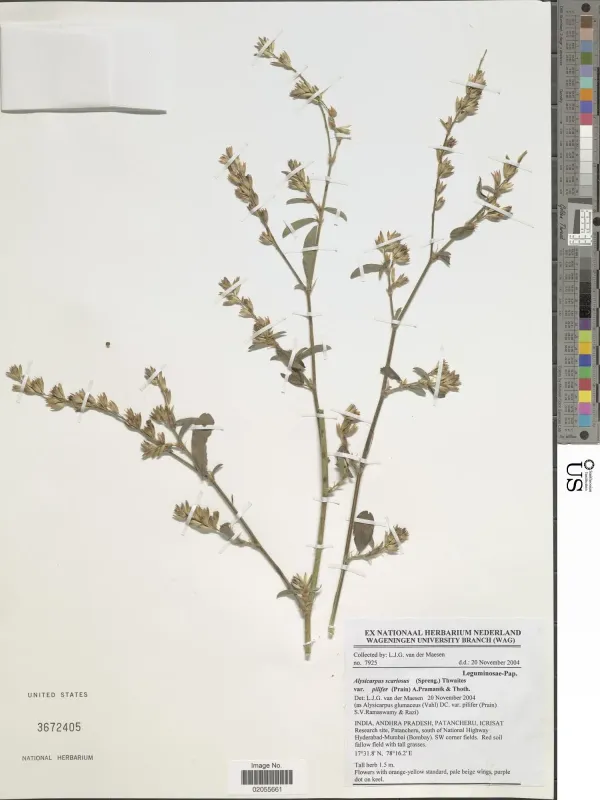
Description
Growing requirements
Alysicarpus scariosus is a perennial herb belonging to the Fabaceae family, widely recognized for its ecological and agricultural value in tropical and subtropical regions. It acts as a resilient forage plant capable of thriving under diverse environmental stressors.
The plant demonstrates a strong preference for well-drained, sandy, or light loam soils. Its root architecture allows for effective moisture uptake, making it a reliable crop in areas where rainfall patterns are inconsistent.
Climatic requirements are centered around high solar radiation levels, which are essential for its vigorous growth. It is highly sensitive to waterlogging, so site selection for cultivation must prioritize areas with effective drainage systems.
Optimal agrotechnical practices involve careful site preparation and ensuring adequate spacing between plants to facilitate airflow. This spacing is vital to minimize the microclimate conditions that favor fungal development.
Soil nutrient management, particularly the application of phosphorus, is beneficial for the symbiosis with nitrogen-fixing bacteria, which in turn enhances the biomass production of the crop throughout the season.
Yield
The primary agricultural use of Alysicarpus scariosus is as a high-quality forage source for livestock. It is valued for its protein content and its ability to maintain palatability even in warmer periods.
Pasture productivity is significantly enhanced when this species is integrated into the sward. Its ability to regrow following moderate grazing pressure makes it a sustainable option for long-term pasture management.
Harvesting for hay requires strict adherence to drying protocols to retain leaf integrity, as the leaves contain the bulk of the nutritional value. Properly stored, the yield provides high-quality winter feed.
Beyond forage, the plant is increasingly studied for its role in soil rehabilitation. By fixing nitrogen in the root zone, it helps restore soil fertility, benefiting subsequent crops in a rotation system.
In terms of yield potential, the crop provides multiple cuts per growing cycle, provided that moisture levels are sufficient and management practices focus on optimal recovery time between harvests.
Main diseases and pests
Pest pressure is primarily driven by foliar-feeding insects, including various species of beetles. These pests can rapidly decrease the photosynthetic area, directly impacting overall biomass and forage quality.
Root rots are the most significant pathological threat to Alysicarpus scariosus. These diseases are almost exclusively linked to excessive soil moisture and poor drainage conditions in the field.
Fungal pathogens such as powdery mildew may appear if humidity remains high within the canopy. Improving stand ventilation is the most effective cultural method to mitigate this risk without chemical intervention.
Weed competition represents a major challenge during the early seedling establishment phase, when the plant is relatively slow-growing. Weed control programs should be prioritized immediately after sowing.
Post-harvest management of seeds and stored material is also critical, as moisture control is essential to prevent stored-grain pests and fungal spoilage, which can render the harvest unsuitable for feeding.