
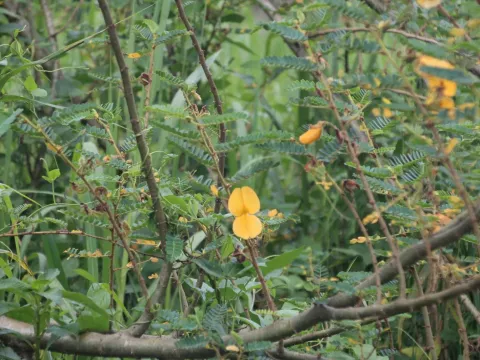
Aeschynomene elaphroxylon
Aeschynomene elaphroxylon
Aeschynomene elaphroxylon is a remarkable woody legume native to tropical Africa. Known for its distinct ability to thrive in waterlogged environments, this plant belongs to the Fabaceae family and is commonly found along the banks of rivers and marshes.
What the section contains
Aeschynomene elaphroxylon
The plant requires high moisture levels and warm tropical temperatures to reach its maximum growth potential. It is highly intolerant of drought and frost, making its cultivation restricted to specific equatorial climate zones where year-round humidity is guaranteed.
Botanically, the species is characterized by its exceptionally light and porous wood. This structure, often compared to natural cork, allows the plant to stay buoyant and effectively transport oxygen to the roots even when submerged in deep mud or water.
Soil requirements involve deep, nutrient-rich alluvial deposits. The plant actively participates in nitrogen fixation, which contributes to the enrichment of soil fertility, making it a valuable asset for maintaining biological balance in wetland areas.
Agrotechnical management focuses on spacing plants correctly to ensure optimal sunlight access. Due to its rapid growth rate, it requires minimal intervention once established, provided the water levels remain constant and supportive of its ecological niche.
The primary economic value of Aeschynomene elaphroxylon lies in its pith-like timber. It is extensively harvested for the production of fishing floats, lightweight rafts, and various insulation materials that require high buoyancy and low density.
Harvesting involves carefully cutting stems at the appropriate maturity stage to ensure the wood's density remains uniform. Proper post-harvest handling, including shade drying, is essential to prevent internal moisture rot and structural decay.
Seed collection is performed after the pods turn brown and begin to split. Collectors must act promptly to ensure the seeds are gathered before they disperse naturally into the aquatic environment, which would make recovery impossible.
Industrial applications continue to expand as the demand for sustainable, natural materials increases. As a fast-growing renewable resource, this crop provides an excellent alternative to synthetic foams and plastics in aquatic applications.
Sustainable harvesting practices involve thinning stands of Aeschynomene elaphroxylon to encourage new growth. This rotational approach ensures that the plantation remains productive for years without damaging the delicate wetland ecosystems where it thrives.