
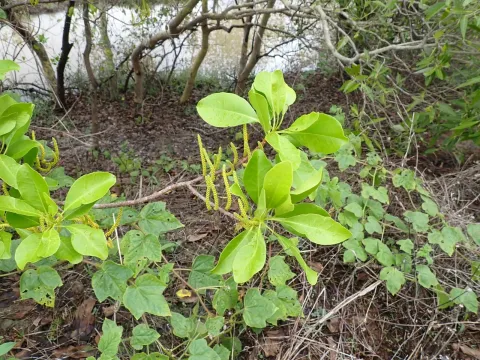
Excoecaria agallocha
Excoecaria agallocha
Excoecaria agallocha, belonging to the Euphorbiaceae family, is a distinct mangrove species widely distributed across tropical coastal regions. It is well-adapted to the intertidal zone, where it withstands fluctuating salinity and tidal water immersion.
What the section contains
Excoecaria agallocha
The plant thrives in regions with tropical temperatures and high humidity, which are essential for its physiological processes. It is a heliophilous species, although it can adapt to lower light intensities during its juvenile growth phases under the canopy.
Soil requirements involve deep, anaerobic, and nutrient-rich muddy substrates typical of estuaries and mangrove swamps. The plant has developed specialized root systems to obtain oxygen despite frequent water saturation.
It acts as a vital component in coastal protection, serving as a buffer against wave action and contributing to soil stabilization. Its ability to thrive in saline conditions makes it a significant subject for the study of salt-tolerance mechanisms in plants.
Propagation is primarily carried out through seeds, which demonstrate high buoyancy, allowing them to travel through water currents to colonize new tidal areas across the Indo-Pacific region.
The timber of Excoecaria agallocha is valued for local construction and the manufacturing of furniture. Despite its utility, the tree contains a highly toxic, caustic latex that requires specialized handling techniques during harvesting and processing.
The name "blind-your-eye" reflects the dangerous nature of the sap, which can cause severe inflammation and temporary blindness. Consequently, harvesting is strictly regulated and requires full protective equipment for workers.
Medicinal applications of the plant include the use of bark and leaves in traditional healthcare systems to treat skin conditions and inflammatory issues, although these uses must be strictly supervised by qualified practitioners.
In addition to timber, the plant has been explored for its antimicrobial and antioxidant properties derived from its secondary metabolites, opening potential pathways for its use in bio-industry and chemical research.
Sustainability is a core issue in the harvesting of this species. Mangrove conservation programs emphasize the importance of maintaining Excoecaria agallocha populations to ensure the health of the surrounding ecosystem and biodiversity.