
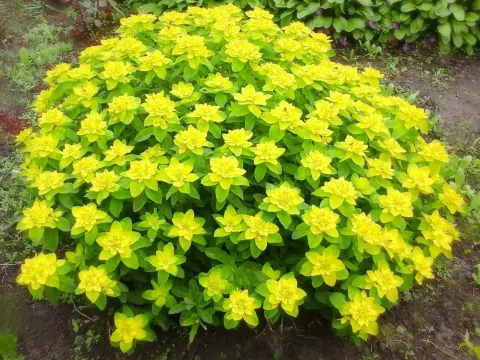
Cushion spurge
Euphorbia polyantha
Cushion spurge (lat. Euphorbia epithymoides, often synonymous with Euphorbia polychroma) is a compact, herbaceous perennial belonging to the Euphorbiaceae family. Native to Central and Southern Europe, it is widely prized for its bright yellow bracts.
What the section contains
Cushion spurge
The plant thrives in full sun exposure, which is critical for maintaining its characteristic mound-like habit and ensuring vibrant coloration. Insufficient light levels often result in leggy stems and poor foliage density.
Regarding soil requirements, cushion spurge prefers well-drained, average, to slightly rocky soils. It is highly intolerant of wet, heavy soils, which can lead to crown rot and premature death of the plant during the winter months.
This species is exceptionally drought-tolerant once established, making it a reliable choice for xeric gardens or rock landscapes. It possesses strong winter hardiness and requires minimal protection in colder temperate zones.
Maintenance is straightforward and involves minimal intervention, primarily limited to cutting back the stems after flowering to keep the plant neat. Occasional pruning helps to stimulate fresh growth and maintain the plant's structural integrity.
Root rot is the most common threat to cushion spurge, typically caused by poorly drained soil or excessive moisture. It is imperative to ensure that the site provides excellent drainage throughout the year to prevent this condition.
Powdery mildew can occasionally affect the foliage, particularly if air circulation is poor due to overcrowding. Ensuring adequate spacing between plants and keeping the foliage dry helps to mitigate this risk.
Pests such as spider mites may infest the plant during hot, dry weather spells. Regular inspection of the undersides of the leaves can help identify an infestation early enough to intervene with light sprays.
Aphids can also cluster on the tender tips of new growth, draining the plant's resources. A gentle stream of water or insecticidal soap is usually sufficient to manage these populations without harming the plant.
Slugs and snails may occasionally feed on young foliage during spring, especially after heavy rainfall. Using physical barriers or organic baits around the base of the plant can effectively deter these pests.