
Elaeocarpus hookerianus
Elaeocarpus hookerianus
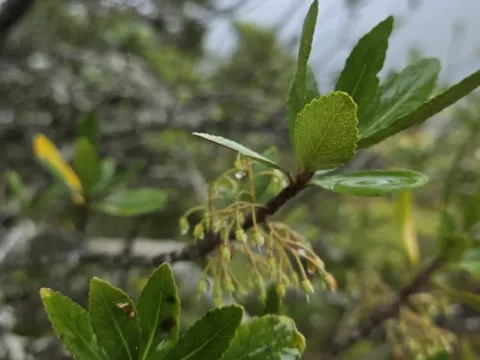
Elaeocarpus hookerianus, commonly known as Pokaka, belongs to the Elaeocarpaceae family. It is an evergreen species endemic to New Zealand, thriving in temperate rainforest environments and characterized by its unique growth pattern as it matures from a divaricating shrub into a tree.
What the section contains
Elaeocarpus hookerianus
The cultural requirements for this plant emphasize the need for deep, well-draining, and nutrient-rich soil. It thrives in locations where the substrate retains moisture without becoming waterlogged, as the roots are particularly sensitive to anaerobic conditions caused by stagnant water.
Regarding climate, the plant prefers cool to moderate temperatures and high atmospheric humidity. While it exhibits some tolerance to cold, severe frosts and hot, dry wind conditions should be avoided, as they can cause significant stress and physical damage to the plant's delicate foliage.
Botanically, the species is distinguished by its dramatic transformation. In its juvenile stage, it presents a dense, interlaced, almost skeletal appearance, which provides a strong evolutionary defense against browsing animals. As it reaches maturity, the plant develops a more open, typical arboreal structure.
The primary use of Elaeocarpus hookerianus is in ornamental horticulture and landscape architecture. Due to its unique branching structure and pendulous, cream-colored flowers, it is frequently utilized in gardens to add structural interest and native aesthetic appeal in suitable temperate regions.
The main pests affecting the cultivation of this species include scale insects and aphids, which target the new growth and leaf undersides. Integrated pest management strategies, such as physical removal or localized insecticidal treatments, are effective in maintaining tree health.
Fungal diseases, specifically root pathogens such as Phytophthora, can occur if soil drainage is compromised. To mitigate these threats, it is essential to ensure a high-quality substrate structure and avoid excessive irrigation that might favor pathogen proliferation.