
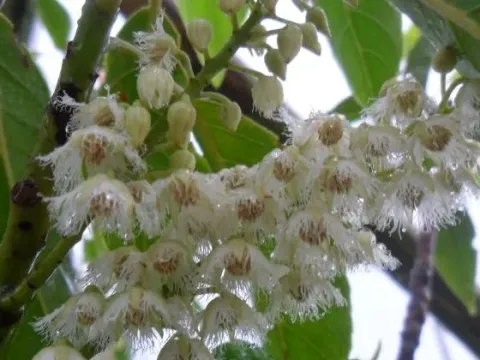
Elaeocarpus floribundus
Elaeocarpus floribundus
Elaeocarpus floribundus is a prominent species within the Elaeocarpaceae family. It is a robust, evergreen tropical tree known for its dense canopy and prolific fruit production, which gives the species its name.
What the section contains
Elaeocarpus floribundus
Native to Southeast Asia, this tree thrives in tropical rainforest climates characterized by high annual rainfall and consistent, warm temperatures. It is highly sensitive to cold and does not tolerate frost.
The ideal planting environment for this culture is a location with deep, fertile, and well-drained soil. It performs best in areas protected from strong gale winds, which could damage its canopy structure.
Soil management requires maintaining optimal moisture levels without causing waterlogging, which the root system is susceptible to. Regular enrichment with organic matter supports the tree's health and fruit yield.
Proper spacing is essential in plantation setups to ensure adequate airflow and sunlight penetration for all trees, which helps in preventing fungal issues common in humid tropical zones.
The primary economic use of Elaeocarpus floribundus is its fruit, which is harvested for both fresh consumption and culinary processing. The fruits are known for their distinct acidic profile.
In local agricultural practices, the fruits are often pickled or used as a base for jams and traditional sauces. They are valued for their texture and their ability to complement various spicy dishes.
Beyond the fruit, the wood of the tree is harvested for small-scale timber applications. It is utilized in rural construction and the crafting of various agricultural tools due to its moderate durability.
Harvesting is traditionally performed manually. Farmers monitor the fruit color to determine peak ripeness, as the flavor balance changes significantly during the final stage of maturation.
Post-harvest handling is critical due to the perishable nature of the produce. Rapid processing or distribution is necessary to ensure the market value is maintained after the harvest is completed.