
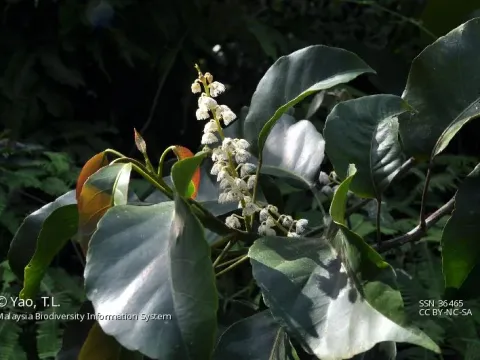
Elaeocarpus petiolatus
Elaeocarpus petiolatus
Propagation of Elaeocarpus petiolatus is primarily achieved through seeds, which require careful handling due to their hard, impermeable coat.
What the section contains
Elaeocarpus petiolatus
For nursery cultivation, seeds should be sown in a well-draining, organic-rich substrate, ensuring the depth does not exceed two centimeters.
Germination is a slow and gradual process, necessitating consistent moisture levels and protection from extreme climatic variations.
Once seedlings have reached sufficient height, they should be transplanted to a site with adequate spacing to minimize inter-tree competition.
Monitoring growth during the first year is critical, as young plants require specialized care to establish a healthy and resilient root system.
Elaeocarpus petiolatus belongs to the Elaeocarpaceae family and is a characteristic species native to the humid tropical forests of Southeast Asia.
The culture thrives in tropical climates characterized by high annual precipitation, stable temperatures, and high humidity throughout the year.
Soil requirements involve deep, fertile, and well-aerated substrates, as the species is sensitive to waterlogging and soil compaction.
Light intensity plays a significant role in tree architecture, with mature specimens preferring full sun to promote dense canopy formation.
Effective management includes maintaining optimal soil structure to facilitate root respiration and nutrient uptake throughout the life cycle.
The primary economic value of this crop is its timber, which is highly regarded in the regional construction and woodworking industries.
Productivity is measured by the annual volume increment of the main stem, which varies depending on silvicultural practices and plantation density.
Beyond timber, certain parts of the plant, including fruits, have historical applications in traditional medicine and rural livelihoods.
By implementing sustainable harvesting techniques, producers can maximize output while ensuring the long-term health of the forest ecosystem.
Quality control during growth, including thinning and pruning, is essential to ensure that the timber meets the necessary market requirements.
Fungal pathogens represent the most significant threat to the culture, particularly in areas where poor drainage leads to stagnant water.
Insect infestation, particularly by leaf-eating larvae, can reduce photosynthetic efficiency and stunt growth in younger stages.
Stem-boring beetles present a chronic risk to the tree's health, potentially creating structural weaknesses in the wood tissue.
- Root rot caused by persistent waterlogging.
- Leaf-eating insect infestations.
- Boring insects targeting the trunk structure.
Preventative management, such as maintaining adequate tree spacing and removing infected plant parts, is the most effective strategy for control.
Timber harvesting is conducted when trees reach optimal technical maturity, typically assessed by stem diameter and tree height.
The felling process must be executed with professional care to avoid collateral damage to the surrounding flora and soil structure.
Fruit harvesting is performed manually to preserve the integrity of the collected material and ensure it meets safety standards for intended uses.
Post-harvest handling is critical, as immediate transport to processing facilities helps prevent degradation and moisture loss in the raw material.
Drying and initial processing of the timber on-site are fundamental steps to ensure the long-term durability and quality of the final product.