
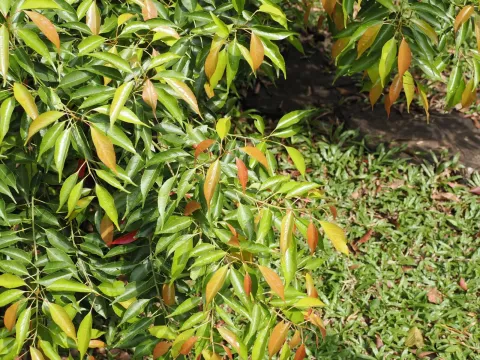
Elaeocarpus mastersii
Elaeocarpus mastersii
Elaeocarpus mastersii belongs to the family Elaeocarpaceae, comprising evergreen trees native to the tropical forests of South and Southeast Asia. These trees play a notable role in the biodiversity of their indigenous forest ecosystems.
What the section contains
Elaeocarpus mastersii
The cultivation of this species requires a stable tropical climate characterized by consistently high temperatures and significant annual rainfall. It is not cold-hardy and thrives best in environments that mimic its native humid forest conditions, avoiding extremes in dryness.
In terms of soil requirements, the species performs best in deep, fertile, and well-drained substrates. Ensuring proper soil aeration is vital, as heavy or waterlogged soils can impede the development of a healthy root system during the plant's early growth stages.
Botanically, the tree is known for its distinctive flowers and complex foliage structure, which are typical of the Elaeocarpus genus. These features make it a subject of interest for botanical research and specialized tropical landscaping projects.
From a management perspective, successful establishment requires weed control and periodic monitoring of soil moisture levels. While primarily wild-growing, the species offers potential value for reforestation efforts in tropical regions where such native flora is being preserved.