
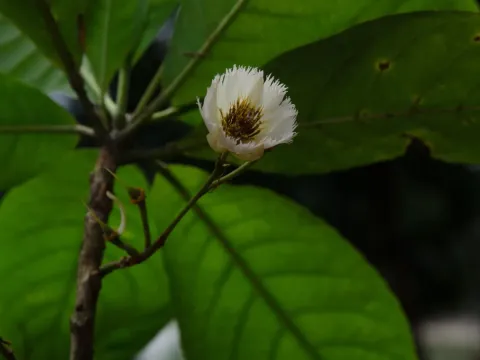
Elaeocarpus grandiflorus
Elaeocarpus grandiflorus
Elaeocarpus grandiflorus, belonging to the Elaeocarpaceae family, is a striking evergreen tree species known for its elegant, fringed bell-shaped flowers. It is primarily valued in tropical landscaping for its ornamental beauty and distinct foliage.
What the section contains
Elaeocarpus grandiflorus
Originating from the tropical regions of Southeast Asia, this species thrives in humid environments with consistently warm temperatures. Due to its sensitivity to cold, it cannot survive frost and is typically found in tropical climates or managed greenhouses.
The plant requires fertile, well-draining soil that is rich in organic matter. Soil aeration is critical for the development of its root system, and gardeners must ensure that the planting site does not suffer from waterlogging or heavy clay compaction.
Sunlight exposure is essential for the tree's development. While it prefers full sun to bloom profusely, young specimens benefit from partial shade during the hottest parts of the day to prevent leaf scorch and maintain moisture balance.
Proper agronomic management involves consistent irrigation schedules and the application of balanced, slow-release fertilizers during the growing season. Pruning is necessary to shape the canopy and remove dead wood, which helps improve air circulation through the branches.
Fungal infections, such as leaf spot and root rot, are the primary health threats to Elaeocarpus grandiflorus. These issues are almost always linked to poor drainage or overly humid conditions with stagnant air circulation.
Pests such as scale insects and mealybugs commonly infest the undersides of leaves and stems. These insects extract sap, causing the tree to weaken and making it susceptible to secondary infections like sooty mold.
Spider mites can become a significant issue in dry, warm conditions. They thrive in low-humidity environments, which is why regular misting or maintaining ambient humidity is a recommended preventive measure for container-grown plants.
Bacterial wilt is less common but can be devastating if the plant's health is compromised. Immediate removal of affected branches is necessary to prevent the spread of the pathogen to the rest of the tree.
To ensure long-term health, regular inspections for signs of stress or pest presence are vital. Implementing an Integrated Pest Management (IPM) approach helps keep the tree vigorous and aesthetically pleasing throughout the year.