
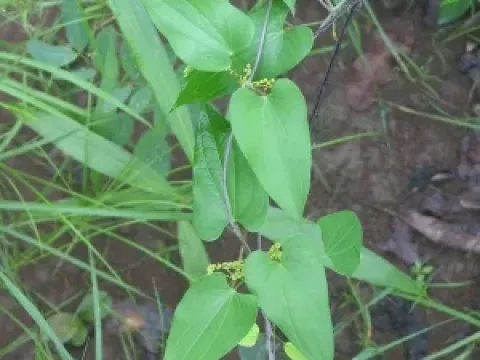
Dioscorea sagittifolia
Dioscorea sagittifolia
Dioscorea sagittifolia is a perennial herbaceous vine belonging to the Dioscoreaceae family. The crop is primarily propagated vegetatively, using small fragments of tubers or whole small rhizomes as planting material.
What the section contains
Dioscorea sagittifolia
The planting material is placed in warmed soil once the danger of spring frosts has passed. For optimal growth, it is crucial that the soil temperature remains at least 15 degrees Celsius.
The planting depth of seed tubers ranges from 8 to 12 centimeters, depending on the mechanical composition of the soil. In lighter soils, deeper planting is permissible to protect the tubers from surface drying.
The distance between plants in a row should be at least 50–60 centimeters. Rows are designed to be up to 1 meter wide, which is necessary for installing trellis structures and ensuring free access to light for the foliage.
Preparing the soil from the autumn by deep plowing is an essential step. This facilitates the development of a powerful root system and simplifies the process of subsequent formation of marketable tubers.
The crop requires a tropical or subtropical climate for full development. The ideal temperature range for vegetation is 25–30 degrees Celsius, and the plant is extremely sensitive to sub-zero temperatures.
The soil must have high water-holding capacity while providing excellent drainage. Water stagnation leads to rapid tuber rot, so areas with high groundwater levels are fundamentally unsuitable for cultivation.
Deep sandy loam or light loamy soils rich in organic matter are optimal for Dioscorea sagittifolia. The soil pH level should be neutral to slightly acidic.
The plant is light-loving, so shading must be avoided in industrial plantations. Intense illumination directly influences the rate of starch accumulation in the plant's storage organs.
A mandatory agrotechnical requirement is the provision of vertical supports. Since this is a vine, without the use of trellises or bamboo stakes, tuber yield drops sharply due to insufficient photosynthesis.
The yield of Dioscorea depends on the length of the growing season, which under favorable conditions lasts from 7 to 9 months. The longer the plant is in the active growth phase, the larger the tubers will be.
The average weight of a marketable tuber can reach several kilograms with proper care. In commercial operations, yields vary from 15 to 30 tons per hectare, depending on planting density.
The use of balanced mineral fertilizers, especially potassium-based ones, significantly increases marketable output. Potassium stimulates the outflow of carbohydrates from the leaves to the underground part of the plant.
Regular irrigation during the period of active foliage growth can increase tuber weight by 20–30 percent. In dry periods, moisture deficiency leads to premature leaf yellowing and stunted growth.
To assess harvest readiness, experts monitor the state of the above-ground parts. When the vine begins to wither naturally, it signals the end of the vegetative cycle and the completion of nutrient accumulation.
The main threat to Dioscorea comes from soil-borne pathogens that cause tuber rot in waterlogged conditions. Fusarium and various types of bacterial rots can destroy up to half the harvest if agricultural practices are violated.
Pests such as nematodes can cause serious damage by attacking the root system. This leads to slowed growth, lower tuber quality, and poor storage shelf-life.
The plant's foliage is often affected by fungal diseases, such as anthracnose, especially in regions with high air humidity. Preventive fungicide spraying is applied in the first half of the season.
Aphids and whiteflies can also infest Dioscorea shoots, sucking sap and promoting the spread of viral infections. Regular crop monitoring helps to curb outbreaks in a timely manner.
- Following a crop rotation of at least 3-4 years.
- Using disease-free planting material.
- Destroying plant residues after harvesting.
- Controlling soil moisture levels to prevent fungal infections.
Harvesting begins after the majority of the plant's stems have dried. This process indicates the completion of nutrient translocation to the tubers and their full physiological maturity.
Lifting the tubers requires special care, as their skin is quite thin. Mechanical damage during digging drastically reduces storage time and increases the risk of pathogen infection.
Usually, specialized clamps or mechanical diggers are used for harvesting, which undercut the soil layer below the tuber zone. This minimizes losses and damage to the product.
After digging, tubers are cleaned of soil residues and dried in a place protected from direct sunlight for several days. This helps to "heal" micro-cracks and prepares the product for storage.
For long-term storage, Dioscorea is kept in cool, dry areas with good ventilation. The optimal storage temperature is 10–12 degrees Celsius, which prevents both sprouting and decay.