
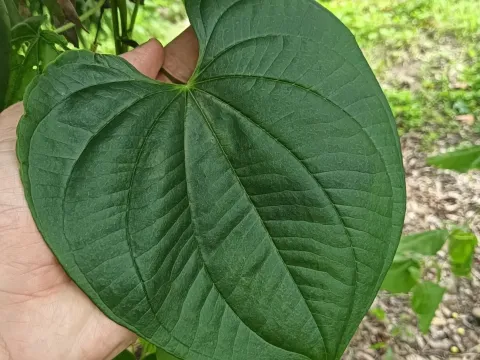
Dioscorea rogersii
Dioscorea rogersii
Dioscorea rogersii belongs to the Dioscoreaceae family, representing a specialized group of tuberous plants adapted to tropical and subtropical climates.
What the section contains
Dioscorea rogersii
Propagation is primarily achieved through tuber cuttings or seeds, ensuring that the plant establishes a robust root system during the early stages of the growing season.
Planting dates are strategically aligned with the onset of the rainy season to capitalize on soil moisture availability, which is essential for uniform sprouting.
Preparation of the planting site requires careful tilling to ensure the soil is loose enough to allow for the downward expansion of the developing tubers.
Proper spacing between plants is crucial to avoid overcrowding, which facilitates airflow and reduces the risk of moisture-related pathologies in the dense foliage.
This crop thrives in deep, well-draining soils with a balanced nutritional profile, as heavy or waterlogged soils inhibit tuber growth and promote decay.
Climatic requirements focus on high and consistent temperatures, combined with adequate sunlight exposure to support the energy-demanding process of tuber formation.
The agricultural practice must include the installation of trellises or supports for the twining stems to maximize photosynthesis and prevent plant lodging.
Water management is critical; while sufficient moisture is required during the active growth phase, irrigation must be managed to avoid saturation near the root zone.
Fertilization with organic amendments early in the cycle provides the necessary macronutrients to support the development of large, high-quality tubers.
The primary threats to the crop include various fungal diseases that colonize the tubers when soil conditions become overly moist and poorly aerated.
Nematodes are a significant pest that can compromise the structural integrity of the tubers, leading to yield losses and lower market quality of the harvest.
Foliar pests, such as aphids or mites, require constant monitoring to prevent damage to the photosynthetic surface area of the vine, which fuels tuber development.
Integrated pest management strategies are recommended, focusing on crop rotation and the use of resistant planting materials to mitigate these risks effectively.
Timely removal of infected debris and the application of suitable fungicidal treatments are essential when early symptoms of disease appear in the field.
The harvest period is determined by the senescence of the above-ground vines, which indicates that the translocation of nutrients into the tubers is complete.
Harvesting techniques prioritize manual extraction or the use of specialized tools to minimize mechanical skin injury, which is a major precursor to post-harvest decay.
Once harvested, the tubers undergo a curing process in shaded, well-ventilated areas to allow the skin to harden, thereby increasing their shelf life.
Economically, Dioscorea rogersii is utilized for its high starch content, serving as a staple food resource and a potential raw material for industrial applications.
Storage facilities should maintain cool, dark, and dry conditions to prevent premature sprouting and to ensure that the nutritional value remains intact until market distribution.