
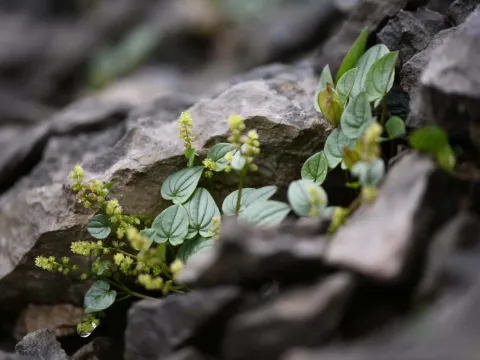
Pyrenean yam
Dioscorea pyrenaica
Pyrenean yam (Dioscorea pyrenaica) is a rare and unique species belonging to the Dioscoreaceae family. Native to the high-altitude rocky environments of the Pyrenees, it is a specialized perennial herb that has adapted to harsh alpine climates.
What the section contains
Pyrenean yam
The plant is characterized by a small, fleshy tuber that functions as a survival organ, allowing it to withstand extreme temperature fluctuations and periods of low nutrient availability in stony soils. Its leaves are small, heart-shaped, and usually grow in a rosette pattern near the ground.
Requirements for successful growth are highly specific, centering on excellent soil drainage. The plant thrives in alkaline, scree-like, or stony soil substrates. Heavy or waterlogged soil is fatal, as it promotes rapid decay of the delicate tuber system.
Climatic needs include high light intensity, cool summer temperatures, and a distinct period of winter dormancy. It is essentially an alpine plant and struggles significantly if moved to warm, humid low-elevation environments.
Cultivation is strictly ornamental or for botanical research, as the species is of no commercial agricultural value. It is best suited for specialized alpine rock gardens where its slow growth rate and specific micro-climatic needs can be managed.
The primary threats to the health of the Pyrenean yam are fungal pathogens, specifically those causing crown and tuber rot. These diseases thrive in environments with poor air circulation or excessive moisture around the tuber base.
Pests are generally limited to soil-dwelling insects like wireworms, which can bore into the tuber, causing structural damage. Aphids may occasionally infest the foliage, though this is less common compared to root-related issues.