
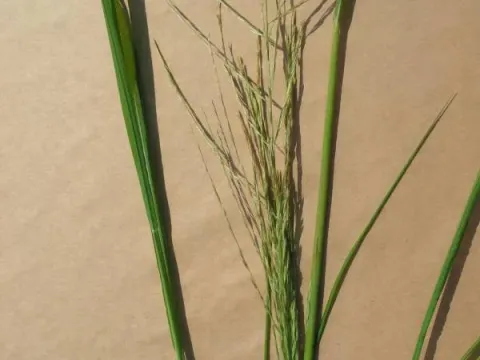
Diplachne parviflora
Diplachne parviflora
Diplachne parviflora is an annual grass species belonging to the Poaceae family. This crop is adapted to various growing conditions and is primarily recognized for its ability to produce significant biomass within a single growing season under suitable climatic regimes.
What the section contains
Diplachne parviflora
The optimal sowing time occurs when soil temperatures are consistently above 15 degrees Celsius. Ensuring that the soil is sufficiently warm is crucial for rapid germination and establishment, which helps the young plants gain a competitive edge over weeds.
Given the small size of the seeds, they should be sown at a shallow depth of approximately 1 to 2 centimeters. A well-prepared seedbed, which is leveled and firm, is essential for achieving uniform planting depth and ensuring that seeds have good contact with the soil moisture.
Agricultural machinery, such as small-seed grain drills, is recommended for planting to maintain consistent seed rates. Proper spacing prevents plant overcrowding, which is vital for maximizing the development of individual plants and ensuring that the crop canopy receives adequate sunlight.
Once established, the crop demonstrates vigorous early growth, which is a key trait for its success as a forage plant. Growers should monitor the fields closely during the first few weeks to ensure that germination is uniform and that initial growth is not inhibited by environmental stressors.
This crop thrives in open, sunny environments where it can maximize its photosynthetic potential. While it exhibits moderate drought tolerance, it performs significantly better when moisture is available during critical development phases, ensuring lush growth throughout the season.
The ideal soil profile for Diplachne parviflora consists of well-drained, fertile substrates, ranging from sandy loams to medium-textured silt loams. It does not tolerate prolonged waterlogging, which can cause root system degradation and hinder overall plant health.
A soil pH ranging from 6.0 to 7.5 is considered optimal for the nutrient uptake of this species. Maintaining a balanced fertility program is essential, as the crop requires sufficient nitrogen for vegetative development and phosphorus for strong root foundation.
In regions with cold climates, the crop is treated as an annual since it is sensitive to frost. A sufficiently long, warm growing season is necessary for the plant to progress through all vegetative stages, from seedling establishment to maturation.
Cultural management practices include regular soil cultivation and the application of fertilizers based on soil test results. Managing weeds during the early vegetative stage is particularly important to prevent any competition that could reduce final biomass yield.
The primary economic use of Diplachne parviflora is in fodder production, providing high-quality green biomass or hay for livestock. Harvesting the crop at the late vegetative or early heading stage ensures the best balance between biomass volume and nutritional content.
Under favorable growing conditions and good agronomic management, the crop can yield multiple cuts in one season. High-intensity management, including irrigation and targeted fertilization, significantly boosts the dry matter production per unit area.
The nutritional profile of the harvested fodder is generally favorable for ruminants, making it a viable addition to grazing mixtures or as a source of supplementary winter hay. Its palatability contributes to better livestock intake and weight gain.
Seed production is also an important aspect of the crop's cycle. Managing the last harvest carefully allows for self-reseeding in extensive production systems, which can help maintain a thick stand of grass in subsequent years without the need for additional sowing.
Furthermore, the crop can be integrated into crop rotation cycles as a green manure or a cover crop. Its root system improves soil aeration and organic matter content, creating a better physical structure for following crops in the rotation.
Fungal diseases, particularly rusts and leaf spots, represent the main biological threat to this grass, especially during humid weather conditions. Poor field ventilation due to high planting density often exacerbates these issues, necessitating proactive management.
Various insect pests, including aphids and stem-boring larvae, can affect the crop by damaging the leaves or stems. Integrated pest management, involving the monitoring of pest populations and the use of natural predators, is recommended to minimize damage.
Weed competition is a significant concern during the crop's establishment phase. If the grass is not allowed to form a dense canopy quickly, opportunistic weeds can easily overrun the field, reducing the quality and quantity of the harvest.
Crop rotation is crucial to prevent the buildup of soil-borne pathogens and pests specific to the Poaceae family. Alternating with non-grass crops helps break the lifecycle of these threats and improves the long-term sustainability of the production system.
Regular field scouting is an essential practice for any agricultural professional. By identifying disease symptoms or pest presence early, growers can intervene with corrective measures, thereby protecting the overall yield and maintaining field health.