
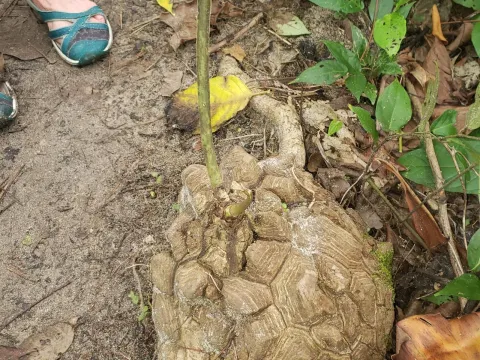
Mexican yam
Dioscorea mexicana
Dioscorea mexicana, commonly known as the Mexican yam, is a remarkable perennial vine belonging to the Dioscoreaceae family. Its most distinctive feature is a large, woody, above-ground caudex that serves as a vital organ for water and nutrient storage in its natural tropical habitat.
What the section contains
Mexican yam
Native to the dry forests of Mexico and parts of Central America, this plant is adapted to environments with distinct dry and wet seasons. In cultivation, mimicking these environmental cycles is crucial for the long-term health and structural integrity of the specimen.
The plant thrives in warm tropical conditions, requiring temperatures typically between 20°C and 30°C. It is highly intolerant of frost, and even exposure to temperatures below 10°C for extended periods can cause significant physiological stress or damage to the caudex.
Regarding soil requirements, Dioscorea mexicana demands an exceptionally well-draining substrate. A mix of pumice, coarse sand, and organic matter is recommended to prevent water retention around the roots, as stagnant moisture is the primary cause of plant failure.
Agrotechnical practices emphasize strict seasonal management. During the growing season, regular irrigation and light fertilization are necessary to support the rapid development of the vines. However, as the foliage yellows, water must be withheld to initiate the dormant phase.
The most significant threat to Dioscorea mexicana is the development of fungal rot. This condition is almost exclusively the result of overwatering or inadequate soil aeration, which leads to the decay of the woody caudex, often starting from the underside or core.
Insect pests, including mealybugs and spider mites, are common issues in greenhouse or indoor cultivation. These pests thrive in dry conditions and target the succulent stems and leaves, potentially causing stunted growth and leaf drop if left uncontrolled.
Preventative measures against rot include the use of sterile, fast-draining potting media and ensuring that the top of the caudex remains dry at all times. Watering should be applied at the base, directed into the soil rather than over the plant.
For pest management, physical removal of insects using alcohol-soaked swabs or insecticidal soap is effective for mild infestations. For more severe cases, systemic insecticides approved for ornamental use may be required, provided they are applied with caution.
In terms of economic use, this species is historically significant for its high concentration of diosgenin. This plant-derived steroid is a critical precursor in the pharmaceutical industry for the semi-synthesis of progesterone and other synthetic steroids.