
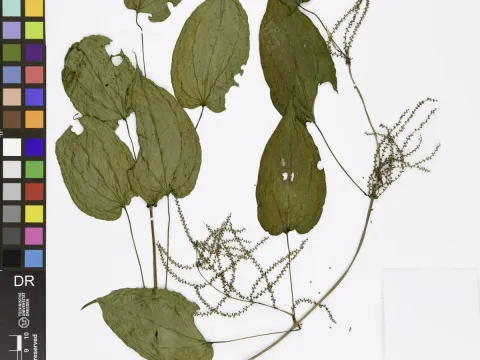
Dioscorea praehensilis
Dioscorea praehensilis
Planting of Dioscorea praehensilis is typically timed with the onset of the rainy season, which ensures adequate soil moisture for initial tuber sprouting. In agricultural practice, it is recommended to plant when soil temperatures reach 20-25 degrees Celsius to ensure robust vegetative development.
What the section contains
Dioscorea praehensilis
For propagation, sections of parent tubers weighing approximately 100-200 grams are used, which are allowed to dry in a shaded area to heal the cut surfaces before planting. Tubers should be buried at a depth of 10-15 centimeters, which protects the sprouts from overheating and helps maintain consistent humidity around the root system.
Due to the plant's vigorous climbing habit, sufficient space is essential. A planting pattern with 60 centimeters between plants and row spacing of about 1 meter is recommended to ensure proper aeration and light penetration, which are vital for healthy growth.
As a climbing vine, Dioscorea praehensilis requires sturdy support structures. Utilizing trellis systems or poles up to 2 meters high allows the vines to spread effectively, significantly increasing photosynthetic activity and promoting larger tuber development.
Regular irrigation is critical during the initial planting phase to ensure successful establishment. While the plant becomes more resilient as it matures, soil moisture must be managed during prolonged droughts to prevent the dehydration of developing tubers.
Dioscorea praehensilis is a tropical member of the Dioscoreaceae family and has high thermal requirements for growth. The optimal temperature range for the crop is 25-30 degrees Celsius, and the plant is highly susceptible to frost, which can cause total crop failure.
The crop thrives in loose, deep, well-drained sandy loam or loamy soils rich in organic matter. Heavy clay soils are unsuitable as they impede proper root expansion and increase the risk of tuber rot due to waterlogging.
Soil pH should ideally be in the slightly acidic to neutral range, between 5.5 and 7.0. Ensuring adequate potassium and phosphorus levels in the soil profile is essential, as these nutrients directly influence the starch content and density of the tubers.
Agricultural requirements include mulching the soil surface to minimize water evaporation and regulate soil temperature during the heat of the season. Organic mulch also aids in the gradual enrichment of the soil with essential nutrients.
Light availability is key to maximizing yields; although the plant can tolerate partial shade, it requires 8-10 hours of bright light for optimal photosynthesis. Furthermore, plots should be sheltered from high winds to protect the fragile climbing vines.
The yield of Dioscorea praehensilis depends significantly on the quality of the planting material, soil fertility, and management practices. In optimal conditions, a single mature plant can produce a substantial tuber weighing between 2 and 5 kilograms per growing season.
In commercial cultivation, average yields range from 15 to 30 tons per hectare, depending on nutrient management and the provision of adequate support. The plant is capable of continuous growth given stable tropical conditions, with the primary accumulation of tuber mass occurring in the later stages of the cycle.
The crop holds significant economic value as a staple food source, providing essential carbohydrates in its native regions. Tubers exhibit excellent shelf life, which allows for storage over several months without the need for expensive cold-chain logistics.
Maximizing productivity requires the application of balanced organic fertilizers, such as compost or well-rotted manure, applied several months before planting. This ensures a steady release of nutrients throughout the plant's development period.
Failure to follow basic agrotechnical rules, such as failing to provide supports, can lead to yield losses of up to 50 percent. Managing vine health is the most critical factor in achieving the full potential of the crop on a given site.
The primary threats to Dioscorea praehensilis are soil-borne pathogens that thrive in overly wet conditions. Fungal infections, such as Fusarium wilt, can damage both the tubers and the aerial parts of the plant, especially in poorly drained or heavy soil types.
Nematodes are a serious pest that attacks tuber tissue, causing deformities and providing entry points for secondary infections. Utilizing high-quality, disease-free planting material and adhering to strict crop rotation practices are the best preventative measures.
Leaf-eating insects can cause significant damage, reducing the total photosynthetic area and slowing tuber mass accumulation. Regular scouting of the plantation allows for the early detection and management of pest outbreaks before they escalate.
Weeds compete severely with the crop during the early stages of establishment. Consistent weeding and soil aeration in the rows are necessary to prevent competition for nutrients and to reduce the humidity levels that encourage fungal growth around the plant base.
Post-harvest sanitation is essential; all plant debris should be removed and destroyed to prevent pathogens from overwintering in the soil. Maintaining a 3-4 year rotation cycle between planting on the same site significantly reduces the buildup of soil-borne pests.
Harvesting of Dioscorea praehensilis commences once the aerial foliage has fully dried and withered, signaling that the tubers have reached maturity. This timing typically coincides with the end of the dry season, facilitating easier fieldwork.
Manual tools such as hoes or garden forks should be used with care to avoid wounding the tubers. Any mechanical damage to the skin significantly shortens shelf life and increases the likelihood of decay during storage.
After excavation, tubers should be cleaned of soil and dried in a shaded, well-ventilated area for a short period. It is important to avoid direct sunlight, as it can cause heat damage or premature sprouting, affecting the culinary quality of the tubers.
Tubers should be graded by size and health before being placed into storage. When stored in a cool, dry, and well-ventilated facility, the tubers can remain viable for up to six months, maintaining their nutritional profile.
Transportation requires protective packaging to prevent bruising or cracking, as the high starch content makes the tubers vulnerable to physical shock. Using mesh bags or ventilated wooden crates ensures proper airflow during transit to markets.