
Tacca
Tacca J.R. Forst. et G. Forst
Tacca is a genus of flowering plants belonging to the family Dioscoreaceae. These perennial herbs are native to the tropical regions of Southeast Asia, Africa, and parts of Australia, typically thriving in the understory of dense rainforests where the environment remains humid and shaded.
What the section contains


Tacca
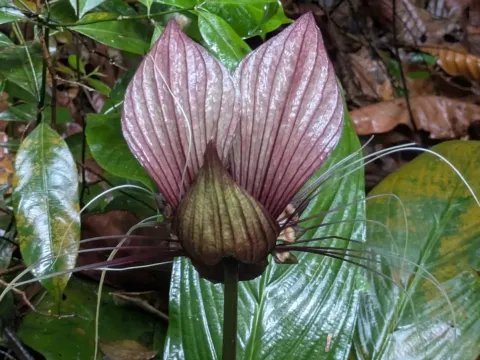
Morphologically, Tacca species are defined by their tuberous rootstocks and their highly specialized inflorescences. The flowers are arranged in umbels, subtended by conspicuous, wing-like bracts that give the plant its characteristic appearance, often compared to a bat or a butterfly in flight.
Agricultural requirements for Tacca are demanding, necessitating a stable tropical environment. Growers must maintain temperatures consistently between 20°C and 28°C. Cold stress can cause irreversible damage to the tubers, while excessive direct sunlight will scorch the leaves and stunt overall growth.
The substrate must be well-draining yet moisture-retentive, mimicking the rich forest floor soil. A typical high-quality mix for intensive cultivation includes decomposed organic matter, leaf mold, and coarse perlite or bark, which prevents compaction and ensures proper oxygenation of the root system.
Economically, Tacca is valued for its starchy tubers, which are harvested to produce flour for culinary and pharmaceutical applications. Additionally, specific cultivars such as the Bat Flower (Tacca chantrieri) represent a significant market segment in the ornamental nursery industry globally.
Fungal diseases are the primary threat to commercial Tacca production, particularly root rot, which is triggered by waterlogged conditions and poor ventilation. Maintaining optimal drainage and using sterilized growing media are critical cultural practices to minimize infection rates across the plantation.
Pests such as spider mites, aphids, and scale insects often infest the foliage, particularly in greenhouse settings with low humidity levels. Effective pest control involves regular monitoring and the implementation of integrated pest management strategies to protect the integrity of the harvestable crop.