
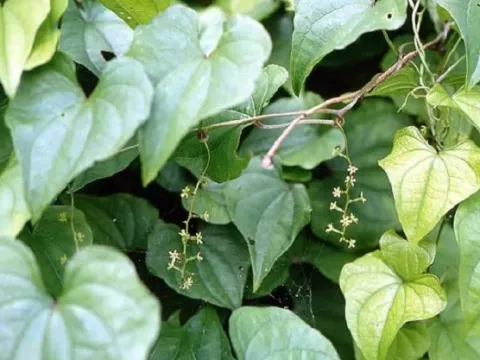
Togo yam
Dioscorea togoensis
Planting of the Togo yam typically begins with the onset of the rainy season. In its native tropical habitats, the ideal sowing window falls between April and May, allowing the plants to establish their root systems while moisture is abundant in the soil.
What the section contains
Togo yam
Farmers utilize small whole tubers or cut sections weighing approximately 150 grams as planting material. These are buried 10 to 15 centimeters deep into raised mounds or ridges, a technique specifically designed to facilitate optimal drainage and root development.
Spacing is a critical factor for success; plants are spaced about 60 to 80 centimeters apart. This distance ensures that the vining plants have sufficient access to sunlight and air circulation, which are vital for vigorous vegetative growth during the first few months.
The planting process often involves incorporating organic matter into the ridges before placing the tuber. This provides a slow-release nutrient source that sustains the plant throughout its long growing cycle, which often exceeds six months.
Mulching is highly recommended after sowing to stabilize soil temperature and retain moisture. A layer of straw or dried leaves prevents the ground from cracking under the tropical sun, ensuring that the young tubers develop in a consistent environment.
Dioscorea togoensis is a tropical perennial that thrives in stable warm climates with temperatures between 25 and 30 degrees Celsius. It requires a long, frost-free growing season to accumulate enough starch in its subterranean tubers to reach maturity.
The crop prefers loose, well-drained loamy or sandy soils. In heavy clay conditions, the tubers become malformed and are prone to waterlogging, which often leads to total crop failure. High levels of organic matter are essential for optimal growth and tuber health.
A soil pH range of 5.5 to 6.5 is considered ideal for Togo yam. Maintaining this acidity level ensures that essential minerals like potassium and phosphorus are readily available for the plant to absorb during its rapid expansion phase.
Vertical support is a non-negotiable requirement for this species. As a climbing vine, it needs stakes or trellises to reach sunlight. When the vines are forced to trail along the ground, the lack of air movement leads to increased disease pressure and significantly lower yields.
Water management is delicate; while the plant requires consistent moisture to thrive, it is extremely sensitive to waterlogging. Planting on mounds and ensuring the field site is elevated or sloped allows excess water to run off, preventing the tubers from rotting.
The yield of Togo yam is largely dictated by the length of the growing season and soil fertility. With proper management, including adequate fertilization and pest control, farmers can expect a yield ranging from 10 to 20 tons per hectare.
Individual tubers can weigh between 500 grams and 2 kilograms. Market-ready tubers are valued for their uniform shape and absence of deep cracks or rot, which are often the result of improper soil preparation or fluctuating moisture levels during the bulking stage.
Potassium-rich fertilizers are particularly effective in increasing yield for this crop. Potassium plays a key role in the translocation of sugars from the leaves to the tubers, resulting in higher starch content and improved storage stability for the harvested product.
Plant health during the peak vegetative stage is a direct predictor of final yield. Crops that maintain a full, healthy canopy throughout the middle of the season consistently outperform those affected by early leaf senescence or herbivore damage.
Crop rotation practices, specifically alternating yams with nitrogen-fixing legumes, help replenish the soil profile. This sustainable practice reduces the dependence on synthetic fertilizers and helps break the lifecycle of soil-borne pathogens that target the yam family.
Anthracnose remains the most significant foliar threat to the Togo yam. This fungal infection creates dark, sunken spots on leaves and stems, which can quickly lead to defoliation, severely inhibiting the plant's ability to produce energy through photosynthesis.
Nematodes represent the most severe subterranean threat to the crop. These microscopic worms infest the tubers, causing galls and internal decay, which ruins the quality of the harvested yield and makes the tubers highly susceptible to secondary bacterial infections.
Insect pests such as leaf beetles and various caterpillar species can rapidly strip a field of its foliage. Without an active canopy, the yam plant loses its ability to sustain tuber growth, leading to small, stunted tubers that have little market value.
Preventative measures are essential; using certified clean planting material is the first line of defense. Additionally, removing all plant debris after the harvest prevents pathogens from over-wintering in the field and infecting the subsequent season's crop.
Storage rot is a post-harvest challenge caused by improper drying and handling. If tubers are bruised during harvest or stored in humid, poorly ventilated conditions, opportunistic bacteria quickly colonize the wounds, destroying the harvest within weeks.
Harvesting begins only when the foliage turns yellow and dies back naturally. This senescence is the plant's biological signal that tuber bulking is complete and that the storage organs have reached their maximum nutritional and physical maturity.
Manual harvesting is performed by carefully digging around the base of the plant with hand tools. Due to the deep-rooting nature of the Togo yam, extreme care is taken to avoid slicing into the tuber, as even small cuts can become entry points for rot.
Once removed from the soil, tubers undergo a curing process. They are kept in a shaded, well-ventilated area for several days to allow the skin to toughen and any minor harvest wounds to seal over, which significantly increases their shelf life.
Sorting takes place immediately after the curing phase. Premium, undamaged tubers are separated for long-term storage or high-value markets, while smaller or damaged yams are sorted for immediate use or processing into flour or dried snacks.
Proper storage is the final step in the harvest cycle. Yams should be kept in cool, dark, and dry conditions with plenty of ventilation. When stored correctly, Togo yams can remain viable for several months, providing a consistent food source throughout the off-season.