
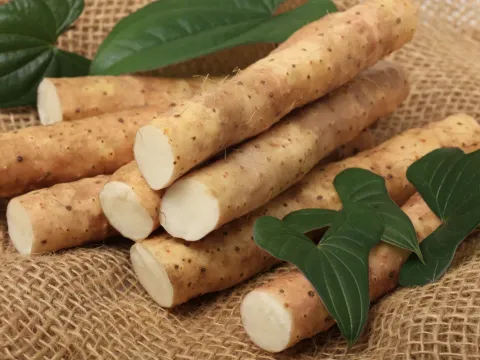
Dioscorea hastata
Dioscorea hastata
Dioscorea hastata is a member of the Dioscoreaceae family. This perennial climbing plant is widely recognized for its edible tubers, which serve as a staple food source in its native tropical regions of Africa and parts of Asia.
What the section contains
Dioscorea hastata
The plant thrives in warm, humid climates, requiring a frost-free environment to complete its growth cycle. Ideal temperature ranges are typically between 25°C and 32°C, with consistent moisture throughout the growing season.
Soil requirements involve well-drained, loose, and friable soil structures. High organic matter content is preferred to support the vigorous underground tuber formation and root system development.
Cultivation practices dictate the use of trellises or supports for the vine stems. Vertical growth is essential for maximizing canopy exposure to sunlight, which directly correlates with the accumulation of carbohydrates in the tubers.
Fertilization management should focus on potassium and phosphorus levels, which are critical for tuber development. Nitrogen should be applied judiciously to avoid excessive leafy growth at the expense of tuber size.
Nematodes represent the most significant threat to Dioscorea hastata production, as they penetrate the tubers and cause significant loss in quality and shelf life. Crop rotation is the primary defense strategy.
Fungal pathogens, including anthracnose and root rot, are common in humid conditions with poor air circulation. Implementing wide spacing between plants can help reduce humidity levels around the foliage.
Pests such as scale insects and spider mites can attack the vines. Regular field monitoring is necessary to apply timely biological or chemical controls to preserve the foliage health.
Viral infections can lead to mosaic patterns on leaves and reduced vigor. Control focuses on removing infected plants immediately and using virus-free tubers for propagation in the next season.
Poor post-harvest storage management can lead to rapid decay caused by storage fungi. Ensuring that tubers are cleaned, dried, and stored in cool, well-ventilated conditions is crucial for preventing spoilage.