
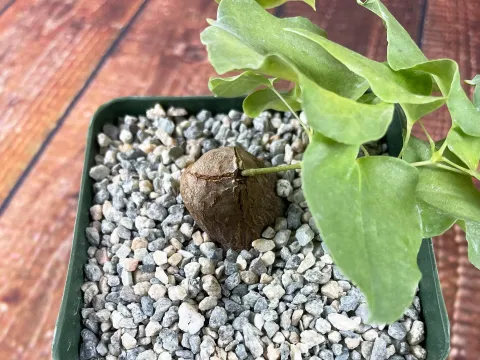
Dioscorea hemicrypta
Dioscorea hemicrypta
Dioscorea hemicrypta is a perennial herbaceous plant belonging to the Dioscoreaceae family. This species is primarily cultivated for its tubers, which possess significant biological value. Propagation is typically achieved through vegetative methods, such as dividing the tubers, to ensure genetic consistency and faster growth rates.
What the section contains
Dioscorea hemicrypta
Planting takes place in late spring, once the danger of frost has passed and the soil has sufficiently warmed up. A depth of 10–15 centimeters is ideal for the tubers to establish a robust root system and maintain appropriate moisture levels without the risk of rot.
The plant exhibits a vigorous vining growth habit. Consequently, setting up support structures is a crucial agricultural requirement. Providing trellises or supports allows the foliage to access sunlight effectively and promotes better airflow throughout the canopy.
Plant density should be managed to accommodate the vining nature of the plant, generally keeping around 3–4 plants per square meter. Overcrowding can lead to increased humidity, which significantly raises the risk of fungal infections within the plantation.
Field preparation involves deep plowing and the incorporation of organic fertilizers to improve soil structure. Ensuring that the field has been free of Dioscorea species for several years prior to planting helps to prevent the accumulation of soil-borne diseases.
The species thrives in loose, well-drained loamy or sandy soils. It is particularly sensitive to heavy, clay-rich soils that may cause waterlogging, which often leads to the decay of the developing tubers. A pH level between 6.0 and 7.0 is optimal for nutrient uptake.
Dioscorea hemicrypta is a heat-loving crop that requires consistent temperatures between +22°C and +28°C during the peak growing season. It does not tolerate prolonged cold spells, which can halt tuber development and reduce secondary metabolite production.
Water management is critical throughout the growing cycle. While the plant requires regular moisture to sustain its fast-growing aerial biomass, it requires an environment where excess water can drain away freely. Drip irrigation is often recommended as it allows for precise control over the moisture level.
Abundant sunlight is necessary for the plant's photosynthetic processes. Areas with full sun exposure are preferred, as shading tends to cause the stems to grow thin and weak, reducing the overall vigor of the tuber harvest.
The crop is highly valued for its medicinal potential. The accumulation of specific steroid saponins makes it a strategic resource for the pharmaceutical industry. Proper agricultural management ensures that the concentration of these active compounds remains within desired standards.
Common diseases affecting Dioscorea hemicrypta include anthracnose and various fungal rots, particularly under conditions of high humidity or poor soil drainage. These pathogens can cause rapid foliage collapse and tuber deterioration if left unmanaged.
Pests such as wireworms and various beetle larvae pose a significant threat by damaging the tubers underground. These physical injuries not only reduce the quality of the crop but also create entry points for secondary bacterial and fungal infections.
Integrated pest management is recommended, starting with high-quality, disease-free planting material. Regular weeding and maintaining clean field borders prevent the buildup of pest populations that could migrate to the crop.
Biological control agents are often used in modern cultivation to manage insect populations without the use of harsh chemicals, which is essential for medicinal crops. Monitoring programs are vital to identify infestations before they cause economic damage.
Field sanitation remains the most effective defense strategy. Removing infected plant parts and ensuring proper spacing allows the crop to maintain stronger natural defenses against common biological threats.
Harvesting usually occurs in the autumn after the aerial foliage has naturally died back. This senescence signals that the plant has completed its growth cycle and that the tubers have reached their peak maturity and metabolite concentration.
Tubers should be lifted carefully from the ground, usually with mechanical harvesters adjusted for deep tillage or through careful manual labor. Minimizing cuts and bruises during harvest is crucial, as any physical damage significantly shortens the shelf life of the product.
Post-harvest processing involves cleaning the tubers and drying them in a well-ventilated, shaded environment. Maintaining temperatures below +40°C during drying is essential to preserve the chemical integrity of the harvested material.
Once dried, the tubers should be stored in cool, dark, and dry conditions. Proper airflow in the storage unit is necessary to prevent the onset of mold and to ensure long-term stability of the biological components.
Sorting the harvest allows farmers to separate high-quality medicinal material from potential seed stock. The best specimens are selected for future propagation, ensuring the continuation of productive genetic lines for subsequent seasons.