
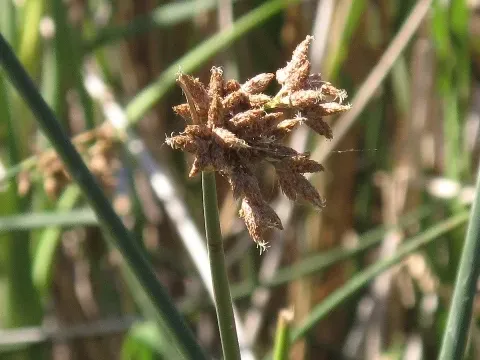
Hardstem bulrush
Scirpus acutus
Hardstem bulrush (Scirpus acutus) is a perennial herbaceous plant belonging to the Cyperaceae family. Native to North America, it is widely distributed across wetland habitats, thriving in marshes, shallow lake shores, and the edges of slow-moving streams.
What the section contains
Hardstem bulrush
The plant features extensive rhizomes that anchor it firmly in the substrate, supporting stems that can reach up to 3 meters in height. These stems are circular, rigid, and leafless, serving as the primary photosynthetic organs throughout the growing season.
For successful growth, this species requires saturated soils or standing water. Optimal water depth ranges from 15 to 60 centimeters, allowing the plant to colonize the littoral zones of various water bodies efficiently.
It thrives in full sunlight and is known for its high adaptability to temperature fluctuations. It remains dormant during the cold season, emerging early in the spring as soon as water temperatures begin to rise.
Soil requirements involve nutrient-rich sediments, such as silt or muck. The plant plays a vital role in wetland nutrient cycling, effectively extracting excess nitrogen and phosphorus from the surrounding water.
Hardstem bulrush is economically valuable as a raw material for traditional weaving. The harvested stems are dried and used to craft baskets, mats, and various decorative objects due to their flexibility and remarkable tensile strength.
In environmental engineering, this species is frequently used for phytoremediation and biofiltration. It improves water quality in constructed wetlands and is essential for biological wastewater treatment systems.
Harvesting is typically performed at the end of the vegetative phase before the stems begin to decompose. Controlled harvesting cycles help maintain the vigor of the plant stand and prevent over-accumulation of dead organic matter.
Beyond material production, the stands provide critical habitat for migratory birds and waterfowl. This makes the plant an essential component in wildlife conservation and restoration projects managed by environmental agencies.
The species also excels at shore stabilization. By creating dense root mats, hardstem bulrush significantly reduces bank erosion caused by wave action and currents, making it a preferred choice for shoreline protection programs.