
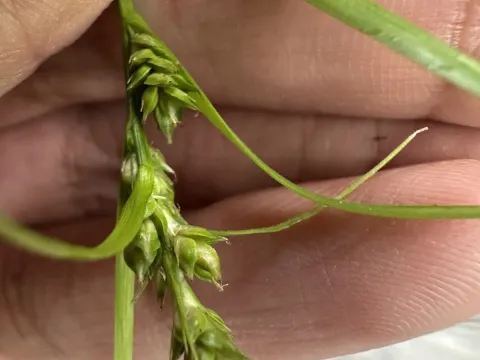
Humped sedge
Carex gibba
Humped sedge (Carex gibba) is a perennial herbaceous plant belonging to the Cyperaceae family. It is naturally adapted to wetland environments, marshy areas, and riparian zones, where it demonstrates high competitive ability against other hydrophytes.
What the section contains
Humped sedge
This species is well-known for its tolerance to waterlogged conditions, making it an excellent candidate for agricultural land that is too wet for traditional grain or forage crops. Its root system is highly efficient in anaerobic soil environments.
Soil requirements involve a preference for moist, organic-rich substrates such as peat or heavy loam. While the plant can tolerate a range of pH levels, neutral to slightly acidic soils facilitate the most rapid biomass development.
Climatic adaptability of humped sedge allows it to thrive in temperate regions with sufficient moisture. It requires full sunlight to partial shade to achieve maximum vegetative growth, contributing to its role in land reclamation projects.
Beyond agricultural forage, the species is increasingly recognized for its role in phytoremediation, as its dense root system effectively absorbs excess nutrients and helps stabilize soil in aquatic management scenarios.
Fungal pathogens represent the primary threat to the health of humped sedge, particularly rust diseases which can defoliate plants during seasons with high humidity and stagnant air. Maintaining proper spacing is essential for disease management.
Insects such as stem borers and certain aphid species can cause localized damage to the foliage, reducing the overall vigor of the stand. Early detection and targeted management are recommended for high-value agricultural plantings.
Root rot caused by stagnant water in poorly drained areas can be a significant setback for crop establishment. Proper site selection and ensuring minimal but adequate water movement are critical prophylactic strategies.
Competition from invasive weeds can suppress the development of young sedge shoots. Effective mechanical control or manual weeding in the early stages of establishment ensures a uniform and productive stand.
Environmental stress, including extreme temperature fluctuations, may temporarily weaken the plants, making them more susceptible to common secondary infections. Maintaining soil nutrient levels helps boost the plant's natural resilience.