
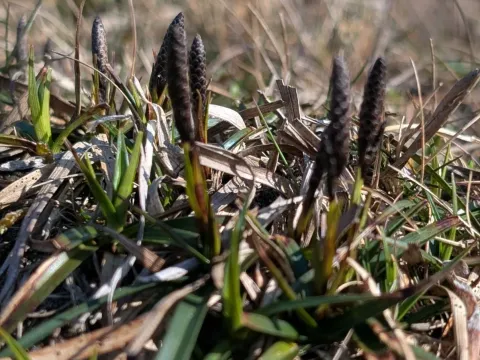
Heather sedge
Carex ericetorum
Heather sedge (Carex ericetorum) is a perennial herb belonging to the Cyperaceae family. It is naturally distributed across Europe and parts of Asia, typically inhabiting dry coniferous forests, heathlands, and sandy hillsides.
What the section contains
Heather sedge
The species is highly valued for its adaptation to poor, nutrient-deficient, and acidic soils. It thrives in well-drained conditions and exhibits significant drought tolerance, making it an excellent candidate for xeriscaping and low-maintenance areas.
Cultivation requires minimal intervention. It prefers sunny spots or partial shade. While it is hardy, ensuring proper drainage is the most critical factor for its long-term health, as it cannot tolerate prolonged root saturation.
In landscape management, heather sedge is utilized for erosion control. Its dense root system binds sandy soils effectively, protecting slopes from weathering and preventing structural soil loss in fragile ecosystems.
For ornamental purposes, it is prized for its early spring green-up and compact growth habit. It is often used in rock gardens, heather gardens, and naturalistic planting schemes to create a visually stable and textural landscape.
Fungal diseases, specifically leaf rust and root rot, are the primary threats. These are usually triggered by poor air circulation or overwatering. Proper placement in dry, airy locations is the best preventive strategy.
Insects like mites and specific aphids can occasionally infest the foliage, particularly during hot, dry spells. Regular inspection helps in detecting and managing pest populations before they cause significant damage.
Weed competition is a significant concern during the establishment phase. As a relatively slow-growing species, heather sedge requires a weed-free environment to thrive during its first year of planting.
Improper soil pH levels can lead to leaf chlorosis. Periodic soil testing ensures that the substrate remains within the optimal range, promoting healthy chlorophyll development and vibrant foliage color.
Sanitation practices, such as clearing debris from the base of the plant in late winter, are essential to minimize disease risk. Removing decaying organic matter prevents the buildup of fungal spores near the root crown.