
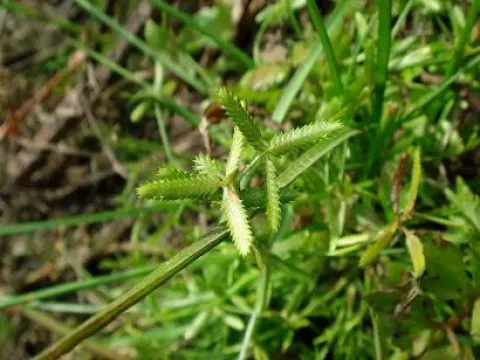
Hakone flatsedge
Cyperus hakonensis
Hakone flatsedge (Cyperus hakonensis) is a perennial herbaceous plant belonging to the Cyperaceae family. It is native to the regions of East Asia, where it thrives in naturally wet habitats and humid environments.
What the section contains
Hakone flatsedge
The botanical characteristics of this species include a vigorous root system and a preference for constantly moist or saturated soil conditions. As a true hydrophyte, it requires consistent water availability to maintain its health and physiological functions.
When cultivating this crop, it is essential to choose sites with nutrient-rich soils. The plant performs best in loam or organic-rich substrates that can retain moisture while providing necessary minerals for optimal growth.
Temperature and light requirements are equally critical for Hakone flatsedge. It requires full sunlight to partial shade to achieve maximum vegetative output, favoring moderate to warm temperatures throughout its growing season.
In terms of agricultural and practical utility, this plant is increasingly used in landscape architecture for wetland restoration and as a hardy, decorative element for aquatic environments and water purification systems.
While generally robust, Hakone flatsedge can be affected by various environmental stresses and pathogens, especially if the planting density is too high or if the water quality is poor.
Root rot and fungal leaf spot are the most common issues. These often occur in stagnant water scenarios where aeration is limited, emphasizing the need for proper water circulation and spacing.
Pests such as aphids can occasionally infest the foliage, particularly during warmer, drier spells that stress the plant. Regular monitoring is advised to maintain plant vigor throughout the summer.
Cultural control methods, such as removing debris and dead foliage at the end of the season, are essential to prevent the overwintering of pathogens that could infect new growth in spring.
Balanced fertilization and careful selection of planting sites are recommended to reduce reliance on chemical interventions, promoting a healthy and sustainable growth cycle for the sedge.