
Hondo bulrush
Scirpus hondoensis
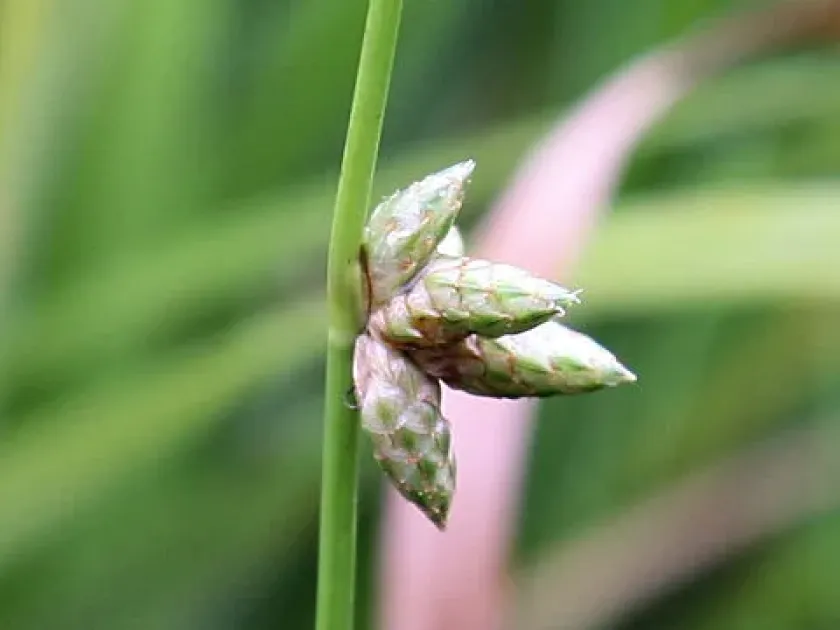
Description
Growing requirements
Hondo bulrush (Scirpus hondoensis) is a perennial herbaceous plant belonging to the sedge family (Cyperaceae). As a hydrophytic plant, it is naturally adapted to wetlands, marshes, and riparian zones, making it a specialized agricultural crop.
The plant originates from East Asia, with a primary distribution in Japan. It is genetically programmed to thrive in environments with consistent water supply and humid atmospheric conditions, which are critical for its vegetative development.
The crop demands high light intensity to maximize photosynthetic output. While it can survive in partial shade, optimal yields and fiber quality are achieved only under direct, abundant sunlight throughout the growing season.
Regarding soil conditions, it prefers muddy, organic-rich substrates that can support its extensive rhizomatous system. The pH level should ideally be neutral or slightly acidic to promote efficient nutrient uptake from the surrounding water.
Standard agrotechnical management involves maintaining a stable water level. Fluctuations in the depth of the water can stress the plant, therefore controlled irrigation or natural wetland management is essential for successful cultivation.
Yield
The primary agricultural use of Hondo bulrush is in the craft industry, specifically for weaving baskets, mats, and floor coverings. The stems are valued for their remarkable combination of flexibility and durability.
Crop yields are proportional to the density of the planting and the availability of nutrients within the aquatic environment. A well-managed plantation can provide multiple years of harvesting if the rhizomes remain healthy and undisturbed.
Yield quality is measured by the length, diameter, and elasticity of the stems. Proper agricultural management ensures that the fiber reaches the required maturity for industrial or artisanal processing.
Harvesting is typically performed once the stems have reached their peak physiological maturity, which usually occurs at the end of the growth cycle. The technique involves hand-cutting to protect the underground root system for future regrowth.
Post-harvest processing involves careful drying in shaded, ventilated areas. This step is crucial to prevent fungal growth, maintain the natural color of the stems, and preserve the structural integrity of the fibers.