
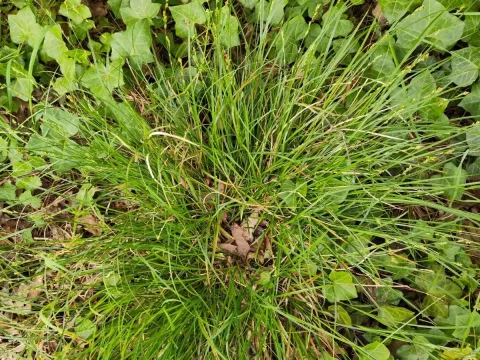
Remote sedge
Carex remota
Remote sedge (Carex remota) is a perennial herbaceous plant belonging to the Cyperaceae family. It is naturally distributed across temperate regions of Europe and Asia, where it thrives in moist, shaded environments such as woodlands and stream banks.
What the section contains
Remote sedge
The plant prefers rich, consistently moist, or even periodically waterlogged soils. It is highly valued for its shade tolerance, making it an excellent choice for planting under tree canopies where other grasses might struggle to survive.
Botanically, Carex remota forms loose, graceful tufts with slender stems reaching 30–60 cm in height. The leaves are narrow and bright green, providing a delicate texture to the landscape throughout the growing season.
In terms of agricultural and horticultural requirements, it demands stable soil moisture and protection from intense, direct sunlight. It is ideally suited for zones with high air humidity and reliable water supply.
Propagation occurs primarily through division of clumps or natural self-seeding. It is a highly resilient species, well-adapted to surviving in stable forest ecosystems, providing ground cover and preventing soil erosion.
Remote sedge is generally robust and resistant to most common agricultural pests. Its fibrous leaves are not preferred by many insects, which keeps damage levels typically low in naturalized settings.
The main threats to the plant's health are fungal pathogens, such as leaf spot diseases, which emerge under conditions of poor air circulation and excessive humidity. Maintaining proper spacing is crucial for prevention.
Root rot can become a significant issue if the planting site lacks adequate drainage, especially during seasons with unusually high rainfall. Healthy roots are essential for the plant's overwintering capability.
Slugs and snails may occasionally feed on tender young leaves during the early spring. Monitoring populations in damp, sheltered areas helps prevent significant cosmetic damage to the foliage.
Management practices to minimize risks include annual removal of dead foliage in late winter or early spring, which promotes healthy new growth and reduces the buildup of fungal spores in the area.