
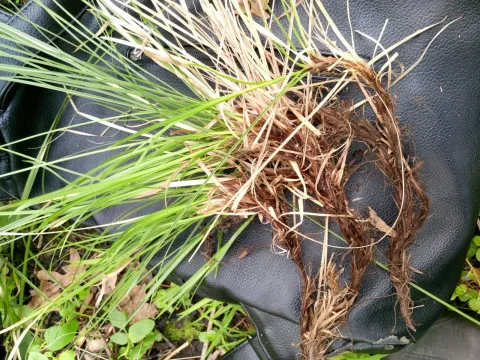
Rhizome sedge
Carex rhizina
Rhizome sedge (Carex rhizina) is a prominent member of the Cyperaceae family, recognized for its distinct rhizomatous structure. This perennial grass plays a vital role in forest floor ecosystems, providing structure and biomass in various habitats.
What the section contains
Rhizome sedge
The botanical structure of the plant consists of a creeping rhizome and relatively short, narrow leaves that form dense mats. Its height ranges between 10 and 30 centimeters, making it a low-growing but resilient component of the understory.
The native range of this species covers vast forest regions across Eurasia, particularly in regions with cold winters and short growing seasons. It thrives in temperate environments and shows remarkable tolerance to shaded locations.
Regarding soil requirements, the species prefers well-drained but consistently moist forest soils. It is highly adaptable to various nutrient levels but performs best in slightly acidic to neutral substrates found in forested areas.
In terms of agricultural and ecological use, rhizome sedge is valued for erosion control on slopes and as a secondary forage source for woodland grazing. Its ability to create a dense root network makes it useful for land restoration projects.
The plant is susceptible to fungal pathogens such as rusts, which can significantly damage leaf tissues, especially in warm and humid seasons with poor airflow.
Pests such as specialized larvae and certain beetle species are known to feed on the foliage and reproductive structures, which can reduce seed production in wild populations.
Waterlogging and soil compaction pose the greatest threats to the health of the root system, often leading to rot and the eventual collapse of individual patches.
Competition from invasive species or faster-growing broadleaf plants can suppress rhizome sedge development, particularly in areas where the forest canopy has been altered.
Sustainable management practices include controlled grazing and the maintenance of natural forest structures to prevent environmental degradation and the onset of plant diseases.