
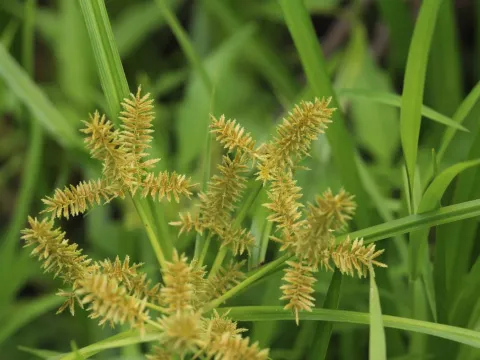
Red-root flatsedge
Cyperus erythrorhizos
Red-root flatsedge (Cyperus erythrorhizos) is an annual herbaceous plant belonging to the Cyperaceae family. In agricultural terms, it is recognized for its preference for wet environments and specific ecological niche in riparian or irrigated zones.
What the section contains
Red-root flatsedge
The plant originates from North America and is widely distributed across moist habitats, including river banks, ditches, and irrigation channels. It has adapted successfully to a wide range of temperate and subtropical regions where soil moisture is consistently high.
Morphologically, the plant is characterized by its distinct reddish-colored base and roots. Its triangular stems support complex, multi-flowered inflorescences that often appear in late summer. These features make it easily identifiable in wetlands or field drainage systems.
Requirements for climate and soil are centered on water availability. The plant thrives in saturated, nutrient-rich soils and warm temperatures. It lacks drought tolerance, making its presence highly dependent on stable water tables or consistent seasonal rainfall.
Economically, it serves as an excellent candidate for constructed wetlands and phytoremediation efforts due to its ability to filter water. While sometimes considered a weed in rice cultivation, its capacity for biomass production and nutrient absorption is notable.
The main challenges associated with this plant in commercial agriculture revolve around its competition with crops for nutrients and light. In irrigated sectors, it can proliferate rapidly if the water levels remain constant throughout the growing season.
Management threats include the plant’s high resilience to common mechanical disturbances. If the root system is not effectively removed, the plant can regenerate from remaining rhizomatous tissues, making manual control labor-intensive.
Common diseases affecting this species are typically fungal, particularly in dense stands where air circulation is restricted. Managing plant density and preventing water stagnation are key to maintaining the health of the surrounding ecosystem.
Pests are generally not a major concern for red-root flatsedge, as it holds a robust defensive posture within its environment. However, monitoring for insect vectors is recommended to protect surrounding higher-value crops from potential virus transfers.
Integrated management plans involving crop rotation and chemical control are highly effective. By altering the moisture regime and implementing timely herbicide applications, growers can minimize the impact of this plant on primary field productivity.