
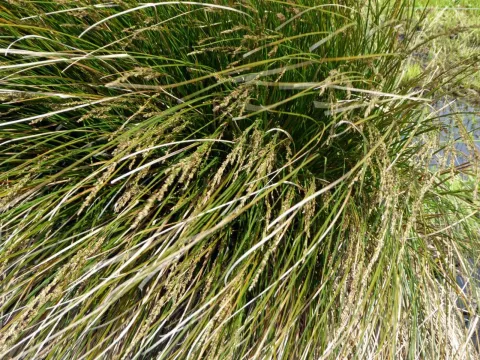
Pūkio
Carex secta
Carex secta, known commonly as pūkio, belongs to the Cyperaceae family. This perennial, clump-forming sedge is native to New Zealand and is renowned for its unique growth habit, developing distinct, elevated trunks made of fibrous roots as the plant matures over many years.
What the section contains
Pūkio
The plant has specific environmental requirements, thriving best in wet or permanently boggy soils. It is frequently employed in agricultural and landscape projects to stabilize banks of streams, ponds, and wetlands, where its dense root system effectively prevents soil erosion.
Carex secta prefers sunny to semi-shaded locations with nutrient-rich soils. While it exhibits great tolerance for diverse soil types, constant access to moisture is critical for its health. Dry conditions can severely inhibit growth and reduce the plant's characteristic vibrant green appearance.
Botanically, the species is defined by its long, weeping, narrow leaves that drape over the elevated trunk. This structural appearance is not only visually striking but also ecologically significant, as it provides shelter and habitat for various aquatic and terrestrial microfauna.
Agronomic management involves monitoring site hydration and clearing competing vegetation during the establishment phase. Once established, Carex secta is a highly resilient species, capable of surviving through a wide range of climatic variations provided its root moisture needs are consistently met.
The primary threats to Carex secta are fungal diseases, such as root rot and leaf spot, typically exacerbated by stagnant water conditions and high humidity. These conditions provide an ideal environment for pathogens, especially in areas with poor airflow through the dense foliage.
Pests, including aphids and specialized beetles, may infest the foliage, particularly in younger plants. While healthy specimens can withstand minor infestations, severe pest pressure can cause significant damage to the leaf structure and overall vigor of the sedge.
Disease management strategies focus on sanitation and preventative care. Removing dead foliage from the center of the clump is essential to improve airflow and prevent moisture buildup, which is the most common trigger for fungal growth in this species.
Chemical control measures should be considered only when physical and cultural methods fail. Utilizing targeted fungicides and insecticides in accordance with local regulations can effectively manage outbreaks without causing harm to the surrounding aquatic ecosystem.
Maintaining biological balance within the planting site remains the most effective long-term strategy for managing threats. Encouraging local beneficial insect populations can help keep pest numbers under control while minimizing the need for synthetic chemical interventions.