
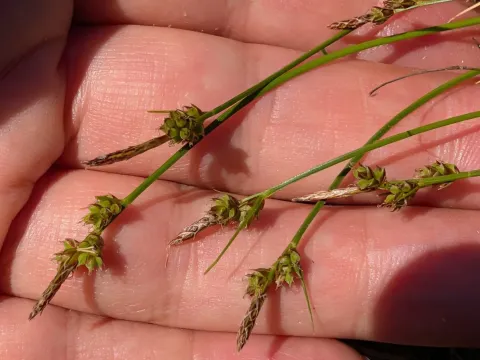
Pill sedge
Carex pilulifera
Pill sedge (Carex pilulifera) is a perennial herbaceous plant belonging to the Cyperaceae family. It is widely distributed across Europe and is known for its ability to form dense, resilient clumps in various meadow and forest habitats.
What the section contains
Pill sedge
Botanically, the plant is characterized by its narrow, dark green leaves and stems ranging from 10 to 40 cm in height. Its name is derived from the spherical (pill-like) shape of its fruit spikes, which develop during the summer growing season.
In terms of growth requirements, this species thrives in acidic or slightly acidic soils with sufficient organic matter. It is a shade-tolerant plant that performs well in woodland edges, yet it can adapt to open, moderate-moisture grassland environments.
Agricultural use of Carex pilulifera centers on its role in natural pastures. Because of its tough foliage and strong root system, it is resistant to grazing pressure and helps in stabilizing soils on slopes where other, more fragile species might fail.
The plant is highly valued for its cold hardiness, making it a reliable perennial species for northern and temperate climates, contributing to the biodiversity and overall structural integrity of the meadow ecosystem.
The primary threats to the health of pill sedge involve fungal pathogens, such as rust fungi, which are particularly prevalent during periods of stagnant air and high ambient humidity within the clumps.
Insect pests, including various larvae that feed on reproductive organs or foliage, can reduce the seed yield and vigor of the plant, especially in cultivated monocultures or seed production fields.
Root rot remains a concern when the plant is grown in compacted soils with poor drainage, as saturated conditions prevent proper oxygen circulation to the root system, weakening the entire plant.
Competition from aggressive, invasive weed species can suppress the development of Carex pilulifera in its early growth stages, requiring careful manual or mechanical weeding until the clump is fully established.
Effective management against threats relies on proper site selection and avoiding over-densification, ensuring that the sedge has enough space for aeration, which significantly reduces the risk of fungal outbreaks.