
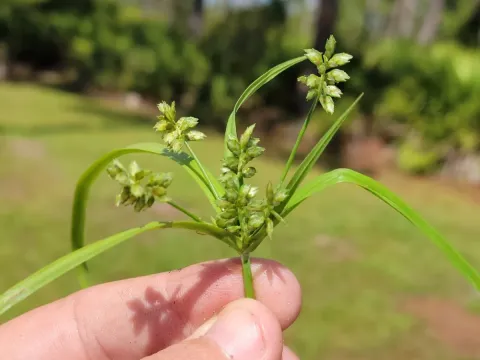
Hyaline flatsedge
Cyperus hyalinus
Hyaline flatsedge (Cyperus hyalinus) is a perennial herbaceous plant belonging to the Sedge family (Cyperaceae). It is primarily recognized for its biological affinity for moist environments, commonly occupying wetlands, riverbanks, and marshy landscapes where soil moisture is persistent throughout the year.
What the section contains
Hyaline flatsedge
Botanically, the plant displays the characteristic triquetrous (three-angled) stems typical of the genus Cyperus. Its vegetative structure is optimized for high water uptake, and the plant often develops complex rhizome systems that allow it to colonize terrain effectively, even under competitive conditions with other vegetation.
Environmental requirements for Cyperus hyalinus are centered on high moisture availability and nutrient-rich soil. While it thrives in various soil types, it shows a distinct preference for silty or loamy substrates that maintain a high degree of water retention and provide consistent mineral access.
The plant demonstrates significant environmental plasticity in relation to temperature, preferring moderate to warm climates. Sufficient solar exposure is essential for photosynthesis and the accumulation of energy reserves within its root nodules, which are critical for survival during dormant periods.
From an agronomic perspective, managing the spread of Hyaline flatsedge is essential in agricultural fields located in low-lying or poorly drained areas. Its rapid vegetative expansion can negatively impact crop yields, necessitating proactive management strategies, including specialized cultivation techniques and integrated weed control methods.