
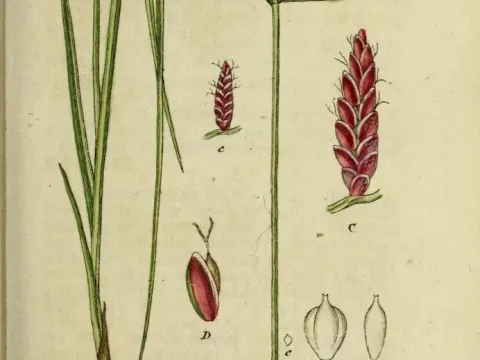
Water nutgrass
Cyperus serotinus
Water nutgrass belongs to the Cyperaceae family and is recognized as a perennial rhizomatous weed. It reproduces effectively through underground stolons and tubers, which ensures its survival over multiple seasons.
What the section contains
Water nutgrass
The plant emerges early in the spring as soil temperatures reach favorable levels. Its vigorous growth allows it to rapidly establish colonies in flooded or marshy areas.
Morphologically, the plant features triangular stems and complex underground storage organs. These organs are highly resilient to environmental stress and allow the weed to thrive in anaerobic conditions.
In agricultural settings, particularly in rice cultivation, this species acts as a severe competitor. It rapidly occupies space and absorbs soil nutrients intended for crops.
The biological cycle is well-adapted to aquatic environments. Its capability to develop aerenchyma enables efficient gas exchange even when submerged in deep water.
The species requires high soil moisture and is primarily found in wetlands or irrigated croplands. It is perfectly adapted to environments with standing water.
Soil preferences include nutrient-rich silt or clay substrates. It grows best in soils that maintain a high organic matter content and neutral pH levels.
It thrives in warm climates where sunlight is abundant. Direct solar radiation is crucial for maintaining the plant's high photosynthetic rate throughout the vegetative phase.
Management of water levels is the most critical agronomic factor. Alternating drying and flooding cycles can be employed to stress and reduce the density of the weed.
Fertilizer management also plays a role, as high nitrogen levels in rice paddies can stimulate excessive growth of water nutgrass compared to surrounding vegetation.
Pathogens and fungi that affect aquatic vegetation can sometimes limit the growth of water nutgrass. However, its natural resilience makes it difficult to eradicate via biological agents alone.
Various insect species may feed on the foliage, but they typically fail to significantly reduce the reproductive capacity of the plant's underground tubers.
The primary threats to this plant are intensive cultivation techniques such as deep plowing. These actions break up the root networks and expose them to lethal desiccation.
Chemical control involving systemic herbicides is widely used in commercial farming. Proper timing of application during the active growing season is essential for success.
Preventative measures include cleaning irrigation canals to block the dispersal of seeds and vegetative fragments into new fields.