
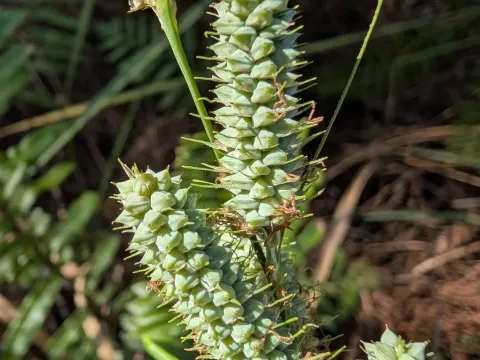
Warty sedge
Carex verrucosa
Warty sedge (Carex verrucosa) is a perennial herbaceous plant belonging to the Cyperaceae family. It is a moisture-loving species typically found in wetlands, marshy areas, and damp meadows, showing a remarkable adaptation to flooded environments.
What the section contains
Warty sedge
This species requires high moisture levels in the soil for optimal growth. It thrives best in heavy, loam-rich, or peaty soils that can retain water throughout the growing season, making it suitable for areas prone to waterlogging where other crops fail.
Climatically, Warty sedge prefers regions with high humidity and temperate conditions. It is well-suited to tropical and subtropical landscapes, although it can be found in various habitats depending on local hydrological patterns and water availability.
Regarding soil fertility, Carex verrucosa performs well on slightly acidic soils. Its root system is exceptionally dense, which aids in soil stabilization and prevents erosion in riparian zones, serving both ecological and agricultural purposes.
In farming practices, this plant is primarily utilized as part of natural pastures. It is capable of biomass production even in challenging, water-saturated soils that are inaccessible for conventional machinery, providing a reliable forage base.
Diseases affecting Warty sedge are predominantly fungal, including various rusts that develop during periods of high humidity and poor ventilation. These pathogens can cause chlorosis and reduced vigor in the foliage if the stand becomes too dense.
Pests such as specialized stem-boring insects and certain aphid species may infest the plants during early growth stages. While the plant is quite resilient, these infestations can negatively impact the overall quality of the biomass produced.
Management of these threats is best achieved through cultural practices rather than chemical interventions. Proper spacing and timely harvesting help maintain the vigor of the plant community and reduce the risk of pathogen buildup in the crop.
To ensure healthy growth, it is essential to monitor for signs of fungal infections after heavy rainfall events. Maintaining the natural balance of the wetland ecosystem helps in preventing widespread damage from secondary pests.
Integrated management should focus on preserving the hydrological regime, which is the primary factor in keeping the Warty sedge population resistant to environmental stressors and typical biological threats.