
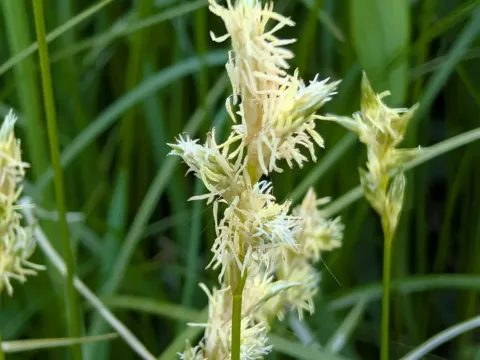
Quaking sedge
Carex brizoides
Quaking sedge, scientifically known as Carex brizoides, is a perennial herbaceous plant belonging to the Cyperaceae family. It is characterized by its rhizomatous growth habit, which allows it to form dense, mat-forming colonies in suitable habitats.
What the section contains
Quaking sedge
Propagation is most efficiently achieved through the division of mature clumps during the early spring or autumn. This method ensures faster establishment compared to seed sowing and preserves the genetic characteristics of the parent plant.
If seeds are used, they require a cold stratification period of several weeks to break dormancy. Sowing in autumn directly into prepared seedbeds allows natural weather conditions to trigger germination in the following spring.
The seeding depth should be minimal, barely covering the seeds with fine soil or sand. Maintaining consistent moisture levels in the top layer is crucial for successful emergence, as seeds are highly sensitive to desiccation.
In landscape applications, container-grown plants are typically spaced 25–40 cm apart to ensure that the area is covered within two full growing seasons.
This species is native to European forest ecosystems and thrives in moist, shaded environments. It prefers fertile, loamy, or clay-rich soils that retain moisture but provide adequate drainage to prevent stagnant water.
Quaking sedge is highly prized for its shade tolerance, making it an excellent candidate for planting in woodland gardens or under the dense canopies of deciduous trees where other grasses fail to grow.
The plant demonstrates significant hardiness, capable of withstanding the varied temperature ranges of temperate climates. It remains dormant during winter and initiates rapid growth as temperatures rise above 5–8°C.
Soil pH preference is broad, though it flourishes best in slightly acidic to neutral soils. Excessive alkalinity can inhibit nutrient uptake, leading to yellowing of the foliage, which is often corrected with foliar applications of chelated iron.
While the plant can survive short periods of drought once established, its growth vigor is significantly reduced without regular moisture. Supplemental irrigation is advised during peak summer months in areas with low rainfall.
Quaking sedge is not primarily utilized as a forage crop due to its high silica content, which makes it less palatable and potentially abrasive for livestock grazing. Its primary economic value lies in ornamental horticulture and environmental services.
In landscaping, harvesting is minimal and usually involves a single annual cut in late autumn or early spring to remove dead biomass and rejuvenate the growth cycle. This practice keeps the planting looking tidy and healthy.
For seed collection, the inflorescences are harvested when they transition from green to a light straw color. Early harvest is necessary because the mature seeds disarticulate and disperse easily with wind or mechanical disturbance.
Harvested material should be air-dried in a shaded, well-ventilated area to prevent molding of the seeds or the vegetative matter. Proper drying is essential for the longevity of the seeds if intended for future propagation.
The use of this species in soil bioengineering for slope stabilization does not involve harvesting in the agricultural sense, but rather the maintenance of the root mat to ensure structural integrity of the terrain.