
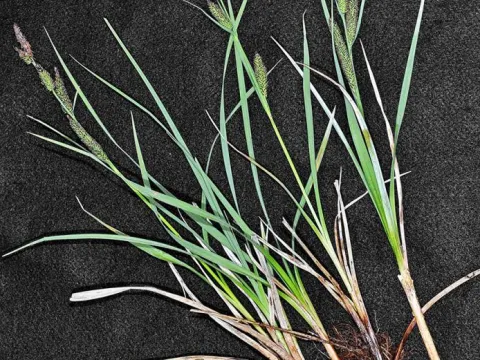
Nebraska sedge
Carex nebraskensis
Nebraska sedge (Carex nebraskensis) is a robust perennial plant belonging to the Cyperaceae family. Originating from the western regions of North America, it is naturally adapted to riparian zones, wetlands, and seasonally flooded meadows, playing a crucial role in local ecosystems.
What the section contains
Nebraska sedge
The plant exhibits remarkable tolerance to diverse soil conditions, including saline and alkaline substrates. It thrives in soils that provide consistent moisture, although it possesses physiological mechanisms to survive occasional drought, making it highly resilient in unpredictable climates.
In agricultural settings, Nebraska sedge is highly valued for its dense rhizomatous root system. This biological feature not only aids in rapid colonization of sites but also makes the plant an excellent choice for erosion control and stream bank stabilization projects.
The species requires full sun exposure to achieve maximum biomass production. While it is hardy against temperature fluctuations, the most vigorous growth occurs during periods of adequate soil moisture, supporting high-quality vegetation for wildlife and livestock grazing.
Management practices for this crop focus on maintaining balanced soil hydration and preventing overgrazing. By allowing the plants to recover after grazing, farmers can ensure the sustainability of the stand, allowing the sedge to persist in the landscape for many years.
Nebraska sedge is known for its high level of natural resistance to common fungal pathogens that often plague other graminoids. However, stagnant water in combination with poor drainage can lead to root pathogens that may hinder the plant's nutrient uptake.
Insect pests typically do not pose a major threat to the overall population, although some specific leaf-chewing insects may cause localized damage. In seed production fields, monitoring for seed-predating insects is essential to ensure a high-quality harvest.
The primary strategy for pest and disease management is cultural control. By promoting air circulation within the stand and avoiding extreme over-saturation or prolonged drought, the crop remains inherently healthy and productive without intensive chemical inputs.
Integrated Pest Management (IPM) guidelines suggest that intervention is rarely necessary for this species. Its adaptation to harsh, changing environments inherently provides a level of protection against the biotic stressors that affect less hardy crops.
Farmers are encouraged to perform regular field inspections during the early stages of the growing season. Early detection of any irregular patches can help in identifying minor issues before they impact the broader field density or the quality of the forage.