
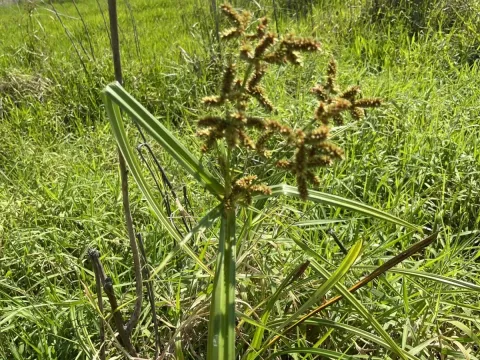
Cyperus alopecuroides
Cyperus alopecuroides
Cyperus alopecuroides, commonly known as a type of foxtail sedge, belongs to the Cyperaceae family. It is a perennial herbaceous plant naturally adapted to humid, wetland, and riparian environments across tropical and subtropical regions.
What the section contains
Cyperus alopecuroides
The plant thrives in warm climates and requires consistent water availability. It is often found in riverbanks, marshes, and agricultural drainage systems where the soil remains waterlogged for the majority of the growing season.
In terms of soil requirements, it prefers nutrient-rich alluvial or silty soils. Its root system, characterized by robust rhizomes, allows the plant to anchor effectively in soft, muddy substrates while facilitating vegetative spread.
Botanically, the species is identified by its stiff, erect stems and dense, fox-tail-like inflorescences. These structures are designed to withstand periodic flooding and are highly resilient to water current fluctuations.
The natural range of the species extends across Africa and Asia. Agricultural cultivation of this sedge is usually localized, focused on its ability to serve both as a raw material source and an ecological tool for water purification.
The primary agricultural use of Cyperus alopecuroides is the production of fiber. The stems are harvested and processed into various goods, including traditional baskets, mats, and biodegradable packaging materials, which are important in rural economies.
Yield capacity is high due to the plant's rapid regrowth rate. Under suitable conditions, multiple harvests per season are possible, as the established rhizome network promotes vigorous recovery after cutting.
In addition to industrial use, the sedge provides ecosystem services by acting as a bio-filter. It absorbs excess nitrogen and phosphorus from agricultural runoff, thereby improving water quality in irrigation channels.
While not a primary forage crop, the foliage can be utilized as supplemental animal feed during periods of scarcity. However, its nutritional value is limited by the high content of structural carbohydrates, making it more suitable for grazing than intensive feed.
Future potential lies in its use for biomass energy or as a substrate for sustainable mulching in other wetland-based farming systems, turning harvest waste into a value-added soil amendment.
Major threats to Cyperus alopecuroides include fungal pathogens that develop in stagnant water conditions. High humidity coupled with poor aeration around the dense stalks encourages the spread of stem rots and mildew.
Insects such as stem-boring caterpillars can significantly reduce the harvestable fiber quality. Additionally, nematode infestations in the root zone can weaken plant stands, leading to chlorosis and reduced growth vigor.
Environmental stress, such as sudden drought or severe water pollution, can hinder the plant's resilience. Although it is naturally hardy, extreme salinity or heavy metal accumulation beyond its tolerance levels will cause population decline.
Integrated pest management in these systems focuses on water level control. Promoting water flow and periodically flushing the growing area helps mitigate the buildup of pathogens and maintain a healthy, productive stand.
To ensure high quality, mechanical removal of diseased or stunted stalks is recommended. Proper thinning of the plants prevents overcrowding, which is the most effective cultural practice for maintaining a healthy and robust crop.