
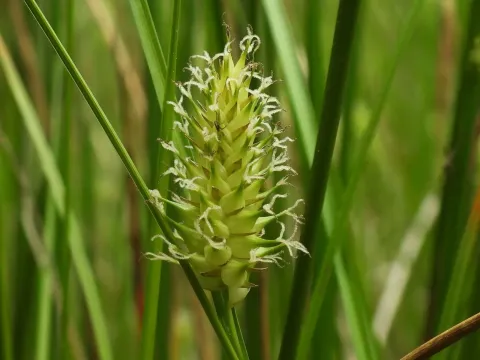
Carex bullata
Carex bullata
Carex bullata, commonly known as the button sedge, is a perennial herb belonging to the Cyperaceae family. It is native to North American wetlands and marshy areas, demonstrating a remarkable adaptation to saturated soil conditions where air availability for roots is periodically limited.
What the section contains
Carex bullata
This species thrives in acidic soils rich in organic matter. In agricultural contexts, it is primarily valued for its ability to stabilize waterlogged soils, acting as a natural barrier against erosion in riparian zones and poorly drained lands that are difficult for traditional cereal crops.
Climate requirements for Carex bullata include consistent soil moisture throughout the growing season. The plant is highly cold-hardy, allowing it to survive winters in northern latitudes without significant damage to its underground rhizomes, which regenerate growth every spring.
Botanically, the species is distinguished by its inflated perigynia (the sac-like structures surrounding the fruits). The foliage is stiff and linear, forming dense tussocks that can effectively reduce water flow velocity in drainage channels and capture sediments, improving water quality.
Agrotechnical management focuses on maintaining hydrologic connectivity. Propagation is often achieved through division of the root system or by seeding in moist nursery beds. Adequate spacing is essential to ensure that each cluster has enough space to develop its full root structure.
The primary threats to Carex bullata populations include fungal pathogens such as rusts and smuts, which thrive in high-humidity environments. These pathogens can compromise the structural integrity of the leaves and reduce the biomass production required for forage or protective use.
Pests such as various beetles and larval stages of moths can infest the sedge, feeding on the foliage. While Carex bullata is relatively robust, large infestations can lead to stunted growth and reduced vigor, especially in stands that have been weakened by prolonged environmental stress.
Environmental stress, such as extreme drawdown of the water table, can trigger an increase in susceptibility to pests. Maintaining a consistent moisture regime is one of the most effective ways to ensure the plant's natural defense mechanisms remain active and efficient throughout the season.
Chemical control measures should be applied selectively, as these areas often exist in sensitive ecosystems near open water. Integrated pest management (IPM) strategies, including biological controls and habitat management, are preferred to minimize the impact on local biodiversity.
Regular monitoring of the site for signs of leaf yellowing or irregular tissue loss is recommended. Early detection of any anomaly allows for prompt intervention, preventing the spread of diseases across the entire stand and preserving the long-term utility of the cultivated area.