
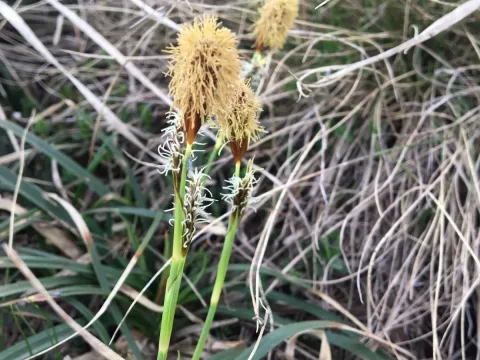
Carex brevicollis
Carex brevicollis
Carex brevicollis, commonly known as short-necked sedge, is a perennial herbaceous plant belonging to the Cyperaceae family. It is widely recognized for its robust nature and ability to thrive in diverse ecological niches.
What the section contains
Carex brevicollis
The native distribution of this species includes parts of Southern and Eastern Europe, the Caucasus, and vast regions of the temperate climatic zone where it is a stable element of the landscape.
Botanically, it is defined by a dense rhizomatous root system that allows for rapid vegetative spread. The leaves are characteristically stiff, which serves as an adaptation to prevent excessive water loss in open meadows.
Regarding soil requirements, the species is highly adaptable, preferring well-drained but moderately moist soil conditions. It exhibits notable resilience against seasonal droughts, making it a reliable perennial plant in fluctuating climates.
Economically, it is valued as a component of natural pastures. While not typically grown as a primary monoculture crop, it provides substantial forage value for livestock, particularly in early spring when grazing resources are scarce.
Like many species of the genus Carex, this plant can be susceptible to fungal diseases such as rust, especially in areas with stagnant air or high humidity.
Disease pressure typically manifests as leaf chlorosis and necrotic spotting, which can limit the nutritional uptake and total forage quality of the meadow stand.
Insect pests are generally not considered a major threat, though occasionally larvae of specific flies or beetles may feed on the foliage during the peak growing season.
Management of these threats relies heavily on proper land maintenance, such as rotational grazing, which prevents the build-up of old plant material and reduces moisture accumulation.
No intensive chemical protection is practiced for this plant, as its resilience allows it to recover naturally from most common environmental and biological stresses.