
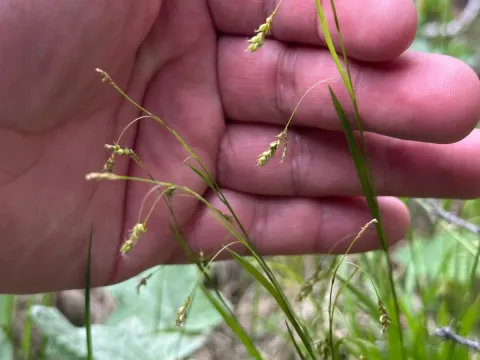
Hair sedge
Carex capillaris
Hair sedge (Carex capillaris) is a perennial grass-like plant belonging to the Cyperaceae family. It is native to arctic and subarctic regions of the Northern Hemisphere, where it thrives in moist tundra, calcareous meadows, and along the banks of mountain streams.
What the section contains
Hair sedge
The botanical structure of the plant consists of dense tufts with slender, drooping stems that can reach heights of 5 to 30 centimeters. Its foliage is notably narrow, resembling fine hair, which gives the plant its distinctive delicate and aesthetic appearance in wild and cultivated settings.
To grow successfully, Hair sedge requires specific conditions. It favors moist, well-drained soils and shows a preference for substrates with a neutral to slightly alkaline pH. Proper calcium content in the soil is crucial for the health and vigor of this species.
The plant is highly climate-resilient, well-adapted to cold northern environments. When cultivated in gardens, it is best placed in locations with partial shade to prevent the root system from overheating during peak summer temperatures.
In terms of economic and practical use, Carex capillaris is primarily valued as an ornamental plant. Its graceful, drooping seed heads and fine texture make it an excellent choice for rock gardens, alpine landscapes, and moist borders, adding a naturalistic feel to any planting scheme.
While generally hardy, Hair sedge can be susceptible to fungal infections such as rust or leaf spot if soil moisture is poorly managed. Excessive waterlogging, especially in warmer conditions, is the primary trigger for such health issues.
Insects and pests, including slugs and snails, may pose a threat to young plants, feeding on the tender foliage. These pests are particularly active during humid periods, which can lead to significant aesthetic damage if not controlled.
Prevention is key to maintaining a healthy patch of Hair sedge. Ensuring proper spacing between plants improves air circulation and reduces the humidity levels around the foliage, which significantly lowers the risk of fungal pathogens.
Routine maintenance includes removing dead or decaying plant matter, which serves as a habitat for pests and a reservoir for potential diseases. Keeping the site tidy is a simple yet effective way to protect the crop.
If chemical intervention is necessary, it should be limited to the early stages of infestation. Using eco-friendly soaps or specific molluscicides can help manage slugs, while systemic fungicides should be applied only as a last resort to preserve the natural balance of the garden.